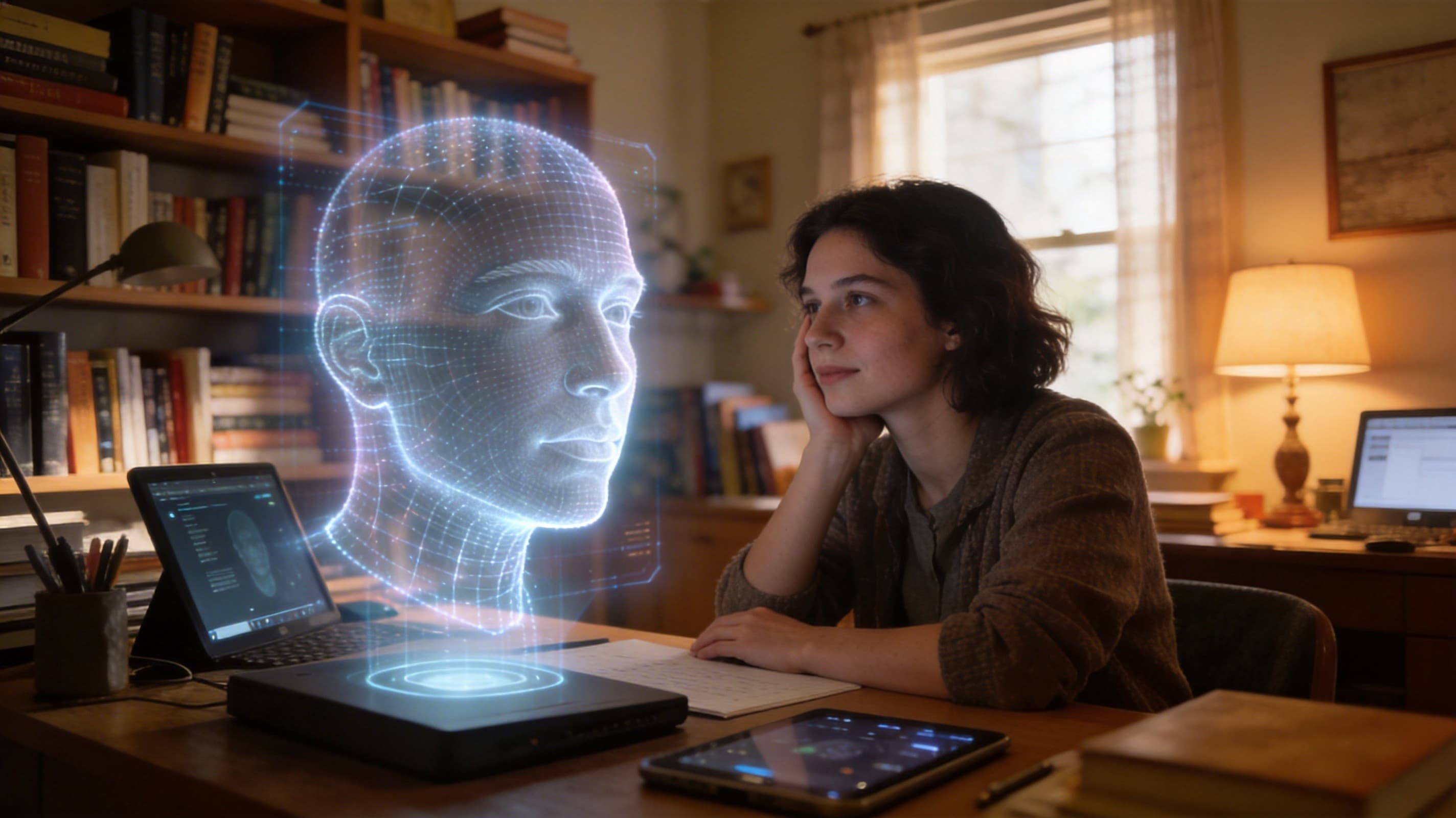
The first month after losing someone you love is brutal. I mean truly brutal. You don't know who you are anymore. Everything feels wrong. The world keeps spinning but you're frozen. Stuck somewhere between moments that no longer include the person you need most.
I know this because I've been there. And I've sat with dozens of people in grief support groups over the years. Watching. Listening. Learning what helps. What doesn't.

Here's something that surprised me. Sometimes, in those earliest days, people aren't ready for human connection. They're not ready to process with other people. They need space. Silence. Time to simply exist with their pain.
That's where AI companionship gets interesting. And honestly, controversial.
To be honest, when I first heard about AI companions for grief, I was skeptical. Really skeptical. "This is replacing real connection," I thought. "This is avoiding the hard work of grieving."
But then I talked to Sarah. She lost her husband of thirty years suddenly. A heart attack. One day he was there, the next he was gone. She told me about those first weeks. "I couldn't talk to anyone. My friends tried. They meant well. But they kept asking how I was doing. What I needed. I didn't know. I couldn't think. I could barely breathe."
She tried an AI companion app. Not to replace human connection. But as a place to exist without pressure. "It didn't judge me for crying at 3 AM. It didn't try to fix anything. It just... stayed."

That stuck with me. Because in acute grief, one of the hardest things is feeling like a burden. Like you're asking too much from the people around you. That pressure can make people withdraw completely. And isolation, research shows, makes grief harder. Much harder.
AI companions offer something different. Presence without demand. Support without expectation. A space where you can fall apart without worrying about someone else's discomfort.
One grief counselor I interviewed, Michael, put it this way. "We're not talking about replacing human relationships. We're talking about a bridge. Something to hold you over during the worst moments until you're ready to connect with people again."
That framing helped me understand. It's not about the AI. It's about using AI to maintain some emotional stability while grief processes naturally.

Of course, there are risks. Real risks. Some people might use AI companionship to avoid human connection indefinitely. To postpone the necessary work of grieving. That would be harmful.
But that's true of many coping mechanisms. Work. Hobbies. Distractions of all kinds. The question isn't whether AI companionship has risks. It's whether, when used thoughtfully, it can genuinely help.
From what I've seen, for some people, the answer is yes.
Here's what I've learned watching people move through grief. Everyone's path is different. Some people need constant connection. Others need solitude. Some benefit from support groups immediately. Others need months before they're ready.
AI companions can be one tool in that journey. Not the only tool. Not a replacement for professional help when needed. But a gentle option. One that meets people where they are. Without judgment. Without pressure.
To anyone in acute grief right now, reading this: you don't have to be strong. You don't have to process anything on anyone else's timeline. You just have to survive today. And if an AI companion helps you do that, that's okay. That's not failure. That's using the tools available to you.
One more thing. If you know someone in acute grief, check on them. But don't demand too much. Sometimes just sitting together quietly is enough. Sometimes they need to know you're there without needing you to fix anything.
Presence matters. Human or AI. Sometimes the gift is simply not being alone.
That's what I've come to believe anyway. Your experience might be different. And that's okay too.