Introduction: The Box in the Attic

I remember the smell—that particular blend of dust, old paper, and forgotten time. It was a Tuesday afternoon in late October, the kind where the light slants gold through the window, and everything feels quiet. My grandmother had passed three months earlier, and we were finally tackling the attic. There, tucked behind Christmas decorations and my father’s childhood baseball gear, was a wooden crate. Not large, but heavy. Inside, layered like geological strata, were hundreds of photographs, bundles of letters tied with faded ribbon, a few daguerreotypes in velvet cases, and a leather-bound journal with pages so brittle they threatened to crumble at a touch.
For a moment, we just stared. My mother reached in, lifted a photograph of a serious-looking couple in late‑19th‑century dress. “That’s your great‑great‑grandparents,” she said softly. “But I don’t know their names.”
That box held a century of our family’s story—and it was slipping away. Names had been lost. Connections had frayed. Faces were becoming strangers. In that attic, with dust motes dancing in the sunlight, I made a promise: I would not let these memories disappear. I would use every tool available to piece them back together, to let our ancestors live again—not as distant names on a chart, but as voices, stories, presences that future generations could meet.
This is the journey I want to share with you: how artificial intelligence, once the stuff of science fiction, became the most compassionate tool I’ve ever held for rebuilding a family tree and preserving the essence of those who came before us.
Why Digitize? The Fragility of Memory
We think memory is permanent. It isn’t. Photos fade. Ink bleeds. Paper yellows and becomes fragile. Stories, told and retold, shift with each telling—details soften, names get swapped, contexts blur. And then there’s the human factor: the uncle who remembers everything but isn’t around to ask anymore; the cousin who moved away and lost touch; the grandparents who took their stories with them.
For years, genealogy meant painstaking archival work: visiting courthouses, scrolling through microfilm, writing letters to distant relatives. It was slow, hit‑or‑miss, and often overwhelming. Many of us start with enthusiasm, then stall when faced with a “brick wall”—an ancestor whose trail vanishes.
But today, we have a new ally: AI. It doesn’t replace the human touch; it amplifies it. By digitizing our family artifacts and applying intelligent analysis, we can recover connections that once seemed lost forever. We can give our ancestors a presence in the digital world—a world our children and grandchildren already inhabit.
How AI Becomes the Family Detective

Let me walk you through how this works in practice. When I opened that attic box, I faced a puzzle with missing pieces. Here’s how AI helped me solve it.
1. Photo Recognition: Putting Names to Faces
The photographs were the most immediate mystery. Some had penciled notes on the back (“Christmas 1923”), but most were silent. I started by scanning every image at high resolution. Then I used an AI‑powered photo recognition service trained on historical clothing, hairstyles, and even facial features.
The AI didn’t give me names outright—that would be magic, not technology. But it did something equally valuable: it grouped faces. It identified that the same woman appeared in photos from the 1890s through the 1920s, aging naturally. It noticed that a certain set of facial features—the shape of the eyes, the curve of the brow—recurred across generations. By clustering similar faces, it gave me a starting point. “These five photos are likely the same person,” it suggested. “These two men are probably brothers.”
Armed with those clusters, I could cross‑reference with the few labeled photos we had. Slowly, names began to attach to faces. The serious couple in Victorian dress? They were Henry and Eleanor Walsh, my great‑great‑grandparents, who emigrated from Ireland in 1882. The woman aging across three decades was my great‑grandmother Clara, whom I’d never met but now felt I was coming to know.
2. Handwriting Analysis: Deciphering the Lost Script
The letters and journal were another layer. My great‑grandfather’s handwriting was a flowing, elegant cursive—beautiful, but difficult for modern eyes to parse. An AI handwriting recognition tool, trained on thousands of historical documents, could transcribe page after page with surprising accuracy.
It wasn’t perfect. It stumbled on unusual abbreviations or ink smudges. But it gave me a draft—a rough transcript that I could then clean up and understand. In those pages, I found stories I’d never heard: how the family survived the 1918 flu pandemic; how my great‑grandmother saved money in a tea tin to buy her first piano; how they worried over a son fighting in World War I.
More importantly, the AI could identify names, dates, and locations mentioned in the text, automatically tagging them. “Uncle James” mentioned in a 1905 letter was linked to a “James O’Connell” in a census record I’d found separately. Connections began to snap into place.
3. Document Correlation: Weaving the Web
Here’s where the real magic happens. AI excels at finding patterns across disparate sources. I fed it everything: the transcribed letters, the labeled photos, scanned birth and marriage certificates, census records, ship manifests, even old newspaper clippings.
The AI built a knowledge graph. It noticed that “Margaret O’Brien” appearing in a 1910 census in Boston was the same “Maggie O’Brien” who wrote a letter in 1922, and likely the same “Mrs. Margaret O’Brien” listed in a 1935 obituary. It suggested possible parents based on age and location. It flagged inconsistencies for me to check (e.g., two different birth years for the same person in different documents).
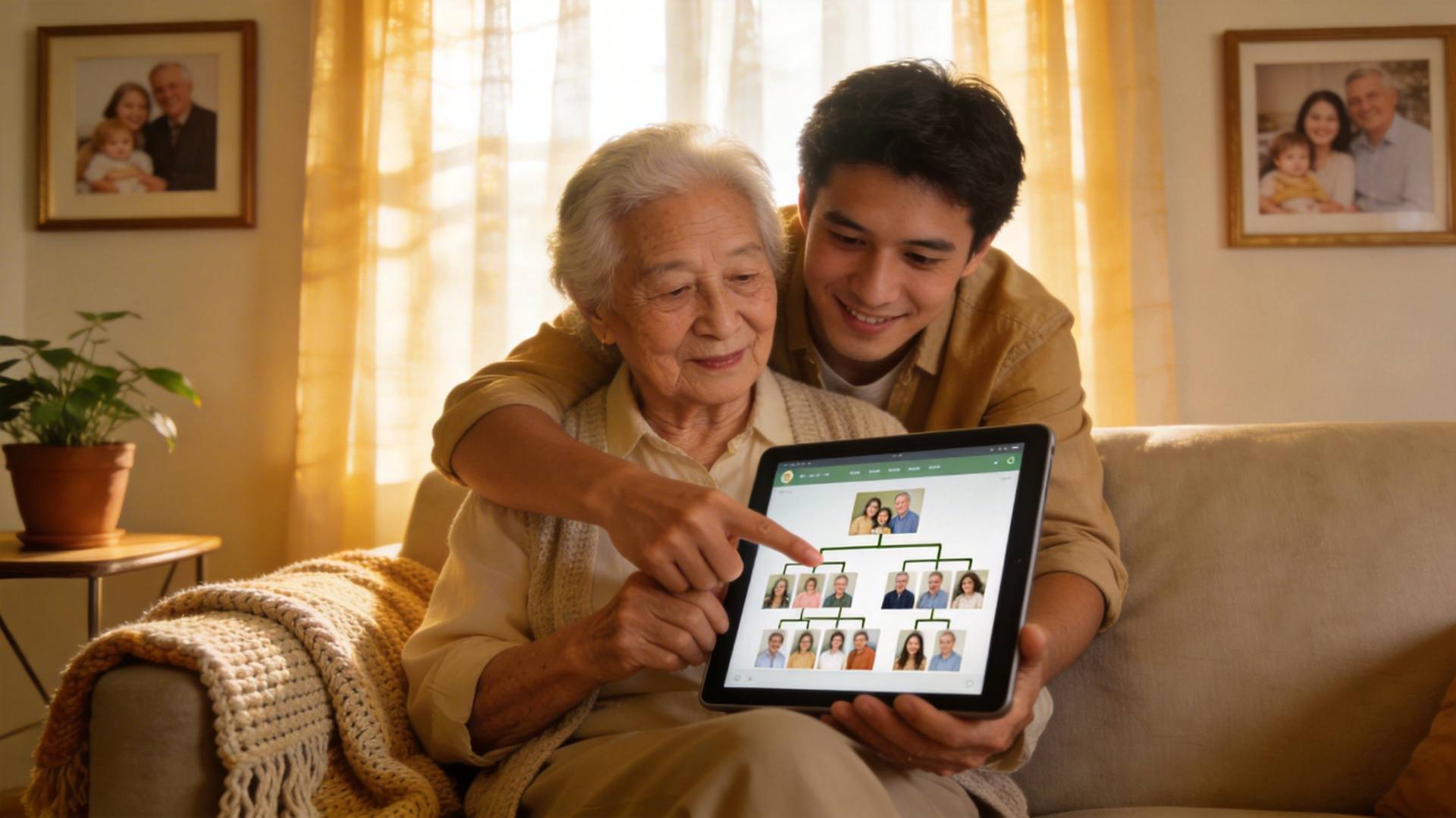
Over weeks, the graph grew from a few scattered nodes into a rich, interconnected web—a digital family tree that was alive with data, not just static names and dates.
The Emotional Core: Letting Ancestors "Live" Again
Technology is only as meaningful as the human connection it enables. For me, the most profound moment came when I could show my mother a digital reconstruction of her grandmother’s life.
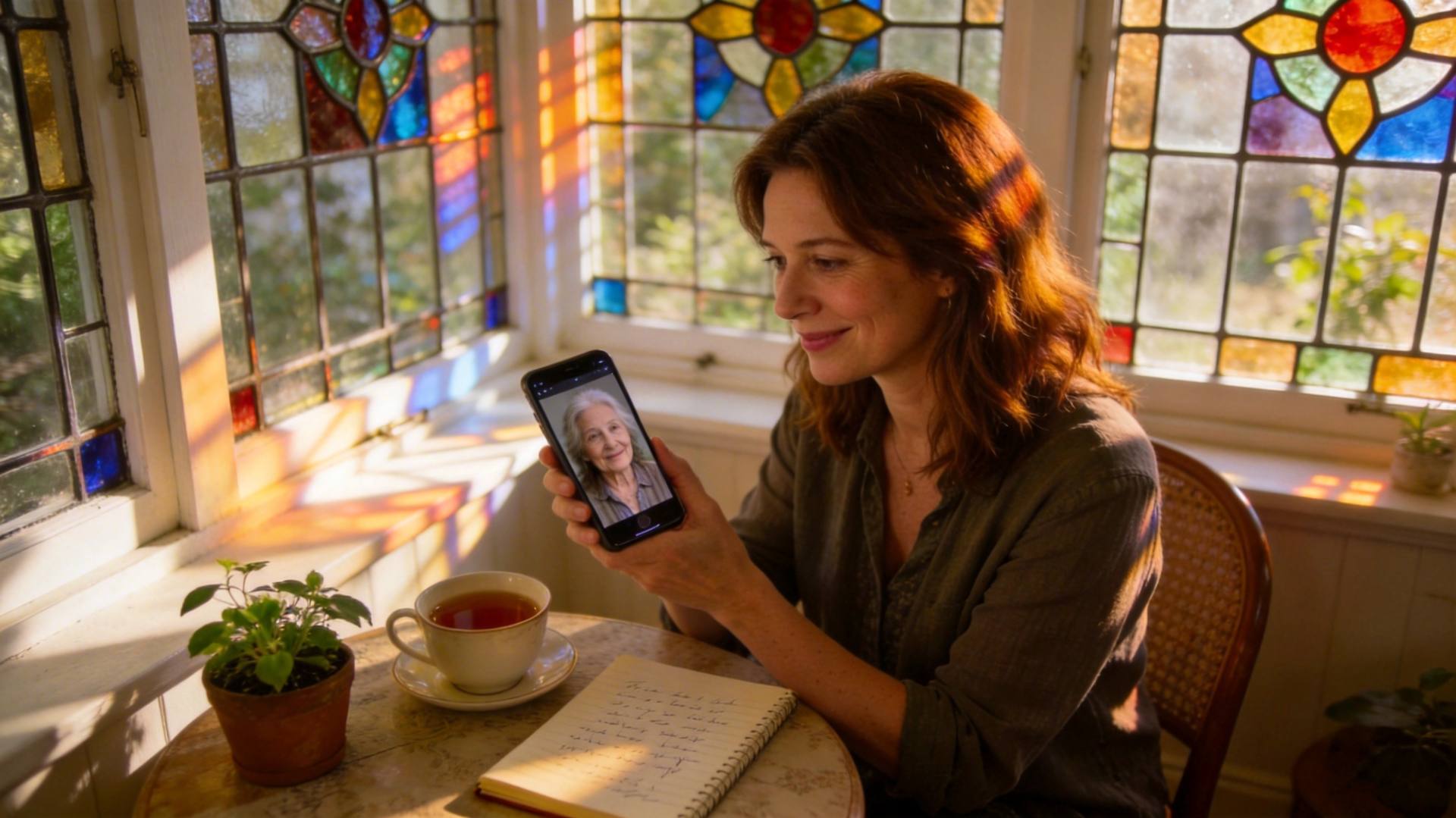
I’d created a simple interactive timeline. Click on a year, and you’d see photos from that period, excerpts from letters she wrote, major family events. There was a section with her voice—a recording from the 1970s that a distant cousin had digitized. My mother sat at the computer, scrolling through her grandmother’s life from girlhood to old age. She cried. Then she smiled. “I can hear her laugh,” she said.
That’s the goal: not a perfect database, but a living digital heirloom. AI helps us assemble the pieces, but we provide the heart. We decide which stories to highlight, which memories to amplify. We add the context that machines can’t grasp—the inside jokes, the family legends, the quiet triumphs.
Today, my nephews can “meet” their great‑great‑grandparents. They can listen to their voices, read their words, see their faces. The past is no longer abstract; it’s a click away. And in a world where families are often scattered across continents, that connection matters more than ever.
Your Turn: A Step‑by‑Step Guide to Getting Started
Feeling inspired? Here’s how you can begin your own family memory digitization project. You don’t need to be a tech expert—just curious and willing to invest some time.
Step 1: Gather and Preserve
Start with what you have. Collect all physical artifacts: photos, letters, diaries, certificates. Handle them gently. Use a flatbed scanner for photos and documents (or a high‑quality smartphone camera if a scanner isn’t available). Save everything as high‑resolution digital files (TIFF or high‑quality JPEG). Organize them in folders by family branch or decade.
Step 2: Choose Your AI Tools
Many user‑friendly tools exist today. For photo organization, consider Google Photos (its face grouping is quite good) or dedicated genealogy software like MyHeritage, which offers AI‑powered photo colorization, enhancement, and face recognition. For document transcription, try Transkribus (specialized for historical handwriting) or even Google Lens for clearer print. For building the family tree, platforms like Ancestry.com and FamilySearch have powerful search algorithms that act like AI, suggesting records based on your existing data.
You don’t need all of them at once. Start with one area—like organizing photos—and expand from there.
Step 3: Digitize in Batches, Not All at Once
This is a marathon, not a sprint. Set aside a couple of hours each weekend. One week, scan all photos from the 1950s. The next, transcribe a batch of letters. Celebrate small wins—every identified face, every deciphered paragraph is a victory.
Step 4: Enlist Family as Collaborators
Share your progress! Create a private family group on Facebook or a shared cloud folder. Ask relatives to contribute their own photos and stories. Older relatives are often treasure troves of oral history—record video calls with them (with permission). Crowdsourcing your family history makes the project richer and strengthens bonds in the present.
Step 5: Build Your Living Archive
As your digital collection grows, think about presentation. Free tools like Google Sites, Canva, or even PowerPoint can create simple interactive timelines or digital scrapbooks. The goal is to make the archive accessible and engaging for everyone, from tech‑savvy teens to grandparents who prefer flipping pages.
The Future: Where AI and Family History Are Heading
We’re just at the beginning. Emerging technologies promise even deeper connections. Imagine AI that can analyze a portrait and generate a plausible voice for that ancestor, reading their own words aloud. Or virtual reality experiences that let you “walk through” a reconstructed ancestral village. Or DNA analysis so precise it can map migration paths across generations.
The ethical questions will grow, too. How much reconstruction is respectful? Who owns digital replicas of ancestors? These are conversations we need to have as families and as a society.
But the core truth remains: technology, at its best, helps us be more human. It helps us remember. It helps us honor. It helps us pass on what matters.
Conclusion: The Gift of Continuity
That wooden crate in the attic now sits in my study, empty of its original contents. But its memories are no longer trapped in brittle paper and fading ink. They live in the cloud, on my hard drive, in the interactive timeline I show at family reunions. More importantly, they live in the stories my mother tells my nieces, in the curiosity of a new generation asking, “What was Great‑Grandma Clara like?”
AI didn’t give me those stories. It helped me uncover them. It was the detective’s magnifying glass, the archivist’s glove, the translator’s dictionary. The heart came from my family—and from the simple, powerful desire to say, “You are not forgotten.”
Your family’s story is waiting to be rediscovered. It might be in an attic, a basement, a drawer. It might be in the memory of an elder whose stories are slipping away. Start today. Scan one photo. Record one conversation. Ask one question.
Because in the end, digitizing family memory isn’t about technology. It’s about love stretched across time. It’s about making sure that a century from now, someone will light up a screen and meet you.
© Anthony Nelson • Published on CancerCura Community • All rights reserved.
This article provides professional guidance on digitizing family memories using AI, with a focus on preserving ancestral connections and emotional legacy.