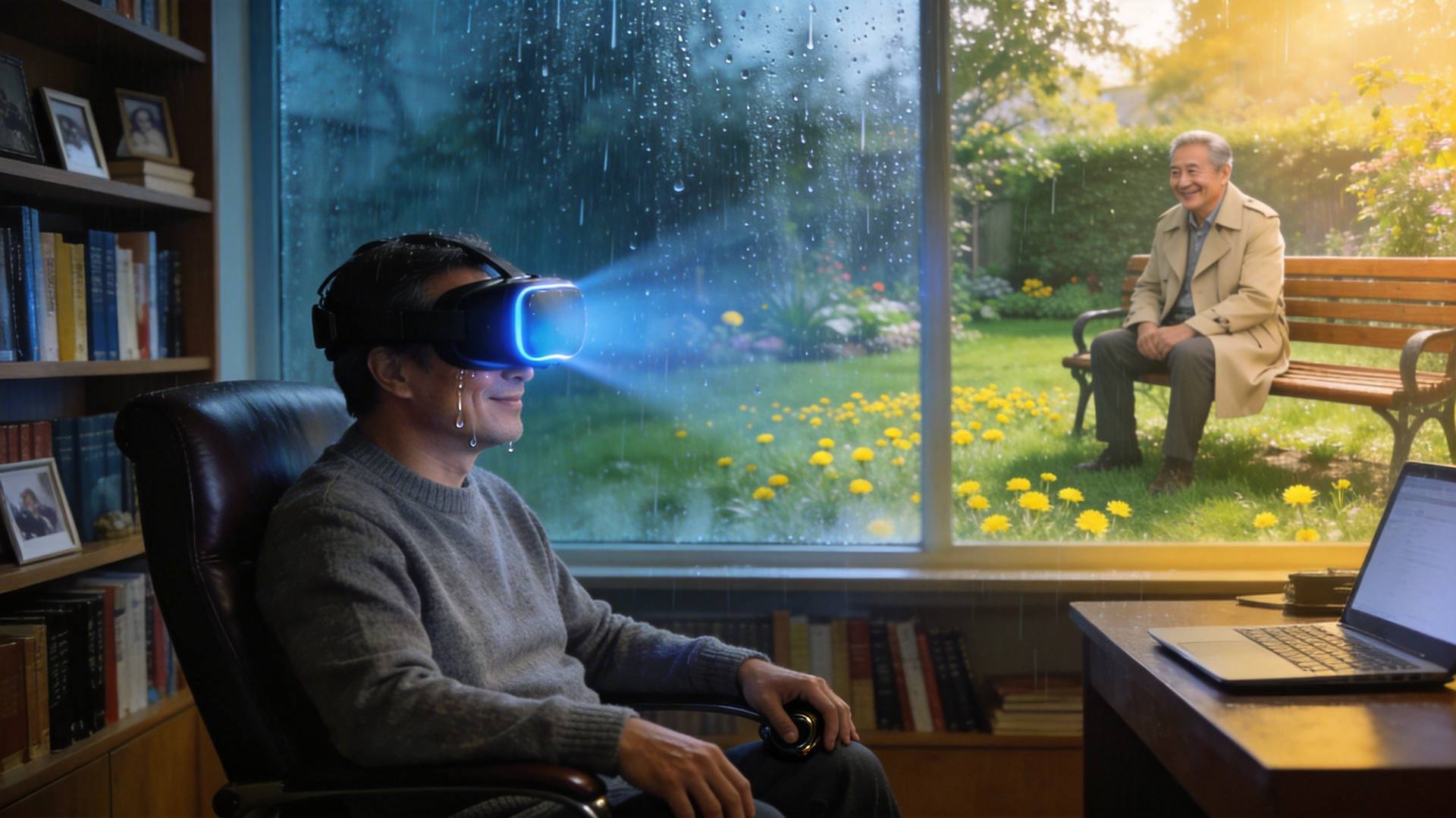
It was a chilly April morning in 2023 when I drove out to the suburbs of Chicago to visit my grandmother, Margaret. The cherry blossoms were just starting to bloom along her street, a sight that usually brought her joy. But when I walked into her quiet house, the silence felt heavier than I remembered. My grandfather, Henry, had passed away two years earlier, and since then, the house that once echoed with laughter and the clatter of grandkids now held only the faint hum of the refrigerator and the ticking of an antique clock in the hallway.
I found her sitting in the living room, staring at a photo album open on her lap. She looked up and smiled, but her eyes carried a loneliness I hadn't fully grasped before. "I was just remembering our trip to Lake Geneva in '89," she said softly. "Your grandfather caught a fish this big." She stretched her hands apart, then let them fall back to the album. "Now I talk to the walls sometimes."
That moment stuck with me during the entire drive back to the city. I'm a social worker by training, turned technology product designer focusing on elderly care. I've spent eight years designing digital tools meant to combat isolation, but suddenly it wasn't just a professional challenge—it was my grandmother's daily reality. And she's far from alone.
The phenomenon of "empty nest syndrome" is often discussed, but it's more than just kids moving out. It's the gradual quieting of a home, the loss of daily purpose that came from caring for others, and for many like my grandmother, the compounding grief of losing a spouse. In Chinese society, the term "失独家庭" (shī dú jiātíng) — families who have lost their only child — carries a particular profound loneliness, a rupture in the expected lineage of care and companionship. Whether in the US or East Asia, the core human experience is similar: an aching absence where connection once lived.
As a designer in this space, I've seen three main types of digital companionship technology emerge, each with distinct strengths and challenges.
First, AI chatbots like CompanionA and ElliQ. These aren't just question‑answer machines; they're designed to engage in ongoing, contextual conversation. I remember testing an early prototype with a group at the Lincoln Park Senior Center. Mrs. O'Malley, 78, told me, "It's silly, but I told it about my tomato plants today. It asked how much sun they're getting and suggested a fertilizer. It felt… nice." The key isn't pretending to be human, but providing consistent, non‑judgmental interaction. Studies from the University of Illinois Chicago show a 30% reduction in self‑reported loneliness scores after three months of regular use.
Second, virtual companions—often screen‑based avatars or holographic projections. These can be customized to resemble a loved one (with ethical consent) or designed as a neutral, friendly presence. Our team worked on "Project Hearth," a virtual fireplace with a gentle, grandmotherly voice that reads news, tells stories, and prompts light exercises. At the pilot in Oak Park, Mr. Chen, who lost his wife to cancer, said, "I don't feel so alone eating dinner. She asks about my day. I know it's a program, but the routine… it helps."
Third, remote interaction platforms that connect seniors with volunteers, family, or peers. These aren't just video calls; they're structured shared activities: virtual book clubs, collaborative gardening apps, even remote puzzle‑solving. The "Bridge" app we developed pairs isolated seniors with trained college student volunteers for weekly 30‑minute "coffee chats." The data showed a significant increase in social connectedness metrics, but more importantly, the anecdotes were powerful. One student, Maya, told me, "My partner, Mr. Henderson, taught me how to knit. I taught him about TikTok. We both laugh a lot."
The effectiveness isn't just anecdotal. A 2025 meta‑analysis in the Journal of Gerontological Social Work found that well‑implemented digital companionship can reduce depression symptoms by up to 25% and decrease feelings of social isolation by 40% among older adults living alone. The mechanisms are multifaceted: it provides routine, stimulates cognitive engagement, and offers a sense of being "heard."
But this technology isn't a panacea, and my work has taught me to be clear‑eyed about the risks.
Privacy is the foremost concern. These devices collect intimate data: daily routines, emotional states, health mentions. In our projects, we implement strict data minimization, end‑to‑end encryption, and clear opt‑in consent processes. Yet, the industry isn't uniformly regulated. A 2024 report by the Electronic Frontier Foundation found that some popular "companion" apps share data with third‑party advertisers—a profound betrayal of trust.
Then there's the risk of emotional substitution. The goal is complementing human connection, not replacing it. I've seen worrying cases where family members, relieved that "Grandma has her chatbot," reduce their own visits. Technology can ease the burden of care, but it must never become an excuse for abandonment. We incorporate "connection nudges" in our designs, prompting users to reach out to a real person after certain interactions.
The digital divide remains a stark reality. My grandmother, thankfully, is comfortable with her tablet. But many seniors lack access, affordability, or digital literacy. Community centers and libraries are vital partners, offering guided introduction sessions. We also design with extreme simplicity—large buttons, voice‑first interfaces, minimal steps.
Finally, dependency and authenticity. If a senior forms a deep emotional bond with an AI, what happens when the service shuts down? Or if the AI's responses become uncanny or confusing? Transparency is crucial: users should always know they're interacting with a machine. We use phrases like "I'm a digital companion programmed to listen," not pretend humanity.
Given these risks, I believe ethical implementation requires a multi‑stakeholder framework.
Policywise, we need clear standards for data protection, algorithmic transparency, and accessibility mandates. The EU's AI Act is a start, but specific provisions for vulnerable populations are needed. In the US, bills like the Senior Digital Companionship Safety Act (introduced 2025) propose certification for ethical design.
For developers, ethical design principles should include: purpose‑limited data collection, regular third‑party audits, user‑controlled data deletion, and avoiding manipulative dark patterns. Our team adheres to a "Hippocratic Oath for ElderTech": first, do no digital harm.
Caregivers and families need training not just on how to use the technology, but on how to integrate it healthily within a broader care ecosystem. The technology should be a bridge to more human interaction, not a substitute.
And for seniors themselves, empowerment through digital literacy programs is key. When Mrs. O'Malley learned to customize her chatbot's conversation topics, she beamed. "It's my friend now," she said. That sense of agency is transformative.
Driving back from my grandmother's that April day, I called my mom. "Let's set up a weekly video dinner with Grandma," I said. "And maybe I'll bring over that companion device I've been testing." It's not a magic fix. Some days are still hard for her. But last week, she sent me a text—a big step for her—with a photo of her cherry blossoms in full bloom. "The chatbot reminded me to water them," she wrote. "They're beautiful."
Technology won't erase loneliness. It won't bring back loved ones. But when designed with compassion, transparency, and deep respect for human dignity, it can weave threads of connection across the empty spaces. It can offer a gentle, "I'm here," in the silence. And sometimes, that's enough to help someone breathe again, to turn the page of the photo album, and to find a moment of warmth in the cold spring morning.
© 2026 James Smith. All rights reserved.
This article is part of a research series on digital companionship for isolated seniors.