Continuing Bonds Theory: How to Navigate Grief After Loss It was a crisp October afternoon in 2023 when Sarah finally closed her eyes for the last time. The room at Northwestern Memorial Hospital was quiet except for the soft hum of the ventilator that had been helping her breathe. I held her hand, feeling the gradual cooling of her skin, and whispered the words we’d repeated to each other every night for the past six months: “I’m here, my love. I’m not going anywhere.” Sarah had been diagnosed with stage‑IV lung cancer in the spring of 2022. We were both 42, with two children—Ethan, then 10, and Lily, 7. Our lives, which had revolved around school runs, weekend hikes in the Cook County Forest Preserves, and Friday‑night pizza, suddenly became a series of scans, chemotherapy sessions, and hushed conversations with oncologists. Through it all, Sarah remained stubbornly hopeful. She’d say, “Jim, we’re going to make every day count.” And we did, until we couldn’t. In the weeks after her death, I felt unmoored. Friends and well‑meaning relatives offered the usual condolences: “She’s in a better place,” “Time heals all wounds,” “You need to move on.” But those phrases rang hollow. I didn’t want to “move on” from Sarah. I wanted to keep her with me, somehow. I just didn’t know how to do that without drowning in sorrow. Then, during a support‑group meeting at Gilda’s Club Chicago, a fellow widower mentioned something called “continuing bonds.” He described it as a grief theory that challenges the old idea of “letting go” and instead encourages maintaining an ongoing connection with the person who died. Intrigued, I spent the next few evenings reading academic papers by psychologists like Dennis Klass and Phyllis Silverman. What I discovered changed my entire approach to grief.
What Is Continuing Bonds Theory? Continuing bonds theory emerged in the 1990s as a counter‑narrative to the dominant “stage‑based” models of grief (like Kübler‑Ross’s five stages). Traditional models often imply that healthy grieving requires detaching from the deceased and reinvesting emotional energy elsewhere. But Klass and his colleagues, after studying bereaved parents, found that many people naturally sustain an inner relationship with their loved one—through memories, conversations, rituals, and even a sense of their presence. Far from being pathological, these ongoing connections could provide comfort, meaning, and a sense of continuity. The theory distinguishes several forms of continuing bonds: 1. **Internalized dialogue** – Talking to the deceased in your mind, asking for advice, sharing daily updates. 2. **Legacy activities** – Engaging in projects or hobbies that were important to them, volunteering for causes they cared about. 3. **Physical reminders** – Keeping personal belongings, photos, or creating a memory box. 4. **Rituals and commemorations** – Lighting a candle on their birthday, visiting their favorite place, writing annual letters. 5. **Spiritual or symbolic connections** – Feeling their presence in nature, dreams, or signs. What struck me was the validation: my urge to talk to Sarah every morning wasn’t a sign of being “stuck.” It was a normal, human response to loss.
Putting Theory into Practice: Five Concrete Steps Reading about the theory was one thing; living it was another. Over the past two years, I’ve developed a set of practices that helped me—and now help others in our support group—navigate grief with more grace and less guilt.
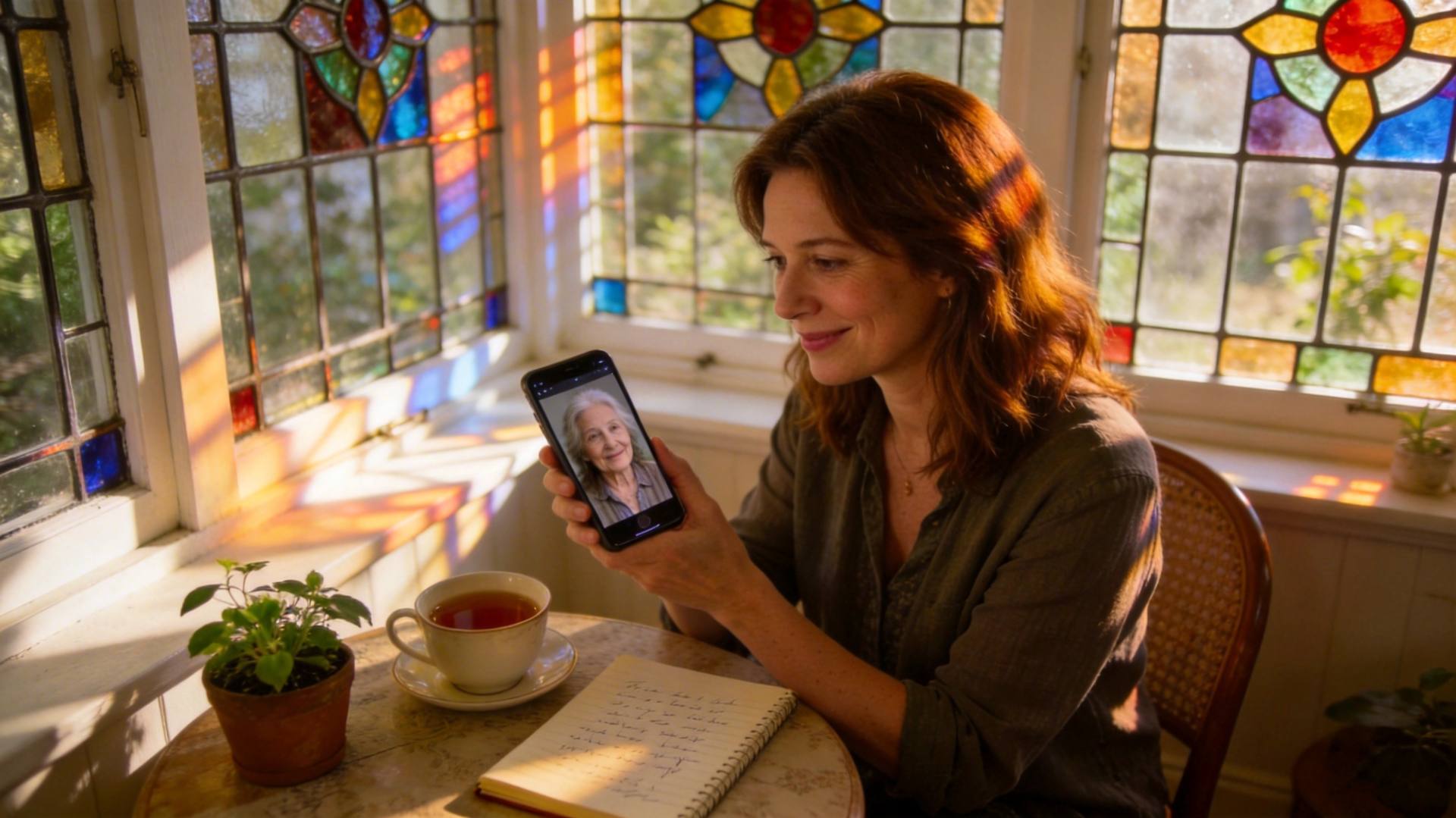
Step 1: Create a “Conversation Corner” I set up a small chair by the bay window in our living room, where Sarah used to drink her morning coffee. Every Sunday evening, I sit there for 20 minutes and simply talk to her. I tell her about Ethan’s soccer game, Lily’s art project, the silly argument I had with our neighbor over a misplaced package. Sometimes I cry; sometimes I laugh. The point isn’t to receive an answer but to maintain the habit of sharing life with her. This practice has turned a lonely ritual into a source of companionship.
Step 2: Curate a Memory Box Instead of packing away Sarah’s belongings, I invited the kids to choose a few items that held special meaning. Ethan picked her worn‑out hiking boots; Lily chose a scarf Sarah knitted during chemo. We placed them in a wooden box along with handwritten notes, a dried flower from our wedding album, and a USB drive with her favorite songs. On difficult days, we open the box together and share stories. The box isn’t a shrine; it’s a tactile anchor to her love.
Step 3: Establish Annual Rituals On Sarah’s birthday (March 15), we bake her famous carrot‑cake cupcakes and deliver them to the oncology ward where she was treated. On the anniversary of her death, we take a hike in the forest preserve she loved and scatter wildflower seeds. These rituals create predictable moments of remembrance that the kids and I can look forward to, rather than dread.
Step 4: Write “Letters to the Future” I keep a journal dedicated to letters to Sarah. Some are short—“Today Lily lost her first tooth. You would have made such a fuss!”—others are long reflections on grief itself. Every six months, I read the previous letters. It’s astonishing to see how the relationship evolves: from raw pain to gentle sadness to grateful remembrance. The letters document a bond that changes but never breaks.
Step 5: Share the Bond with Others I started a monthly “Continuing Bonds Circle” at our local library. We don’t call it a grief group; we call it a “connection circle.” Participants bring an object or story about their person, and we discuss how we keep them present in our lives. The circle has become a lifeline for many, including a mother who lost her son to leukemia and a husband whose wife died of breast cancer five years ago. Hearing how others sustain their bonds normalizes the experience and sparks new ideas.
Real‑Life Example: Maria’s Story Maria, a 58‑year‑old retired teacher, joined our circle after her husband, Carlos, died of pancreatic cancer. She was struggling with intense guilt because she’d donated most of his clothes too quickly, fearing they would “hold her back.” After learning about continuing bonds, she decided to create a “memory quilt” from the few remaining shirts. She enlisted her grandchildren to help cut squares and stitch them together. The project took three months, and during that time, Maria found herself telling the kids stories about Carlos—his love of salsa dancing, his terrible puns, how he proposed on a beach in Puerto Rico. By the time the quilt was finished, Maria felt she had not only preserved Carlos’s memory but actively woven him into the family narrative. She now sleeps under the quilt every night and says, “It feels like he’s hugging me.”
Why This Approach Matters in Cancer Care For those of us touched by cancer, grief is often complicated by the long, grueling journey of treatment. We may have already experienced “anticipatory grief” during the illness. Continuing bonds theory acknowledges that complexity and offers a framework that honors the relationship rather than urging its dissolution. It aligns beautifully with the cancer‑care community’s emphasis on holistic support—addressing emotional and spiritual needs alongside physical ones. Moreover, maintaining a connection can actually reduce symptoms of prolonged grief disorder (PGD). Studies show that individuals who engage in continuing‑bonds practices report lower levels of depression, anxiety, and loneliness. They also find more meaning in their loss, which fosters post‑traumatic growth.
A New Way Forward I won’t pretend the pain vanishes. Some mornings I still reach for Sarah’s side of the bed and feel the empty space like a physical blow. But now I also feel her presence in the sunlight that streams through our window, in the laughter of our children, in the quiet courage that grows each day. The continuing bonds theory gave me permission to grieve in a way that feels authentic—to love Sarah in her absence as actively as I did in her presence. If you’re walking this path, I invite you to experiment with one small practice. Maybe it’s setting a place for them at the dinner table once a week, or planting a tree in their memory, or simply speaking their name aloud when you’re alone. There’s no right or wrong way, only what feels true to your heart. Grief isn’t a problem to be solved; it’s a relationship to be tended. And sometimes, the most healing thing we can do is to keep the bond alive. --- *James Jones is a bereaved spouse, grief‑support advocate, and facilitator of the Continuing Bonds Circle in Chicago. He writes about loss, resilience, and the small daily practices that help us carry love forward.*

Creating a quiet space for ongoing dialogue with loved ones.
Symbolizing the enduring connection that grief does not sever.
Hope and renewal emerging from the landscape of loss.
James Jones • Midwest, USA (Chicago)
"Grief is not a problem to be solved; it's a relationship to be tended."