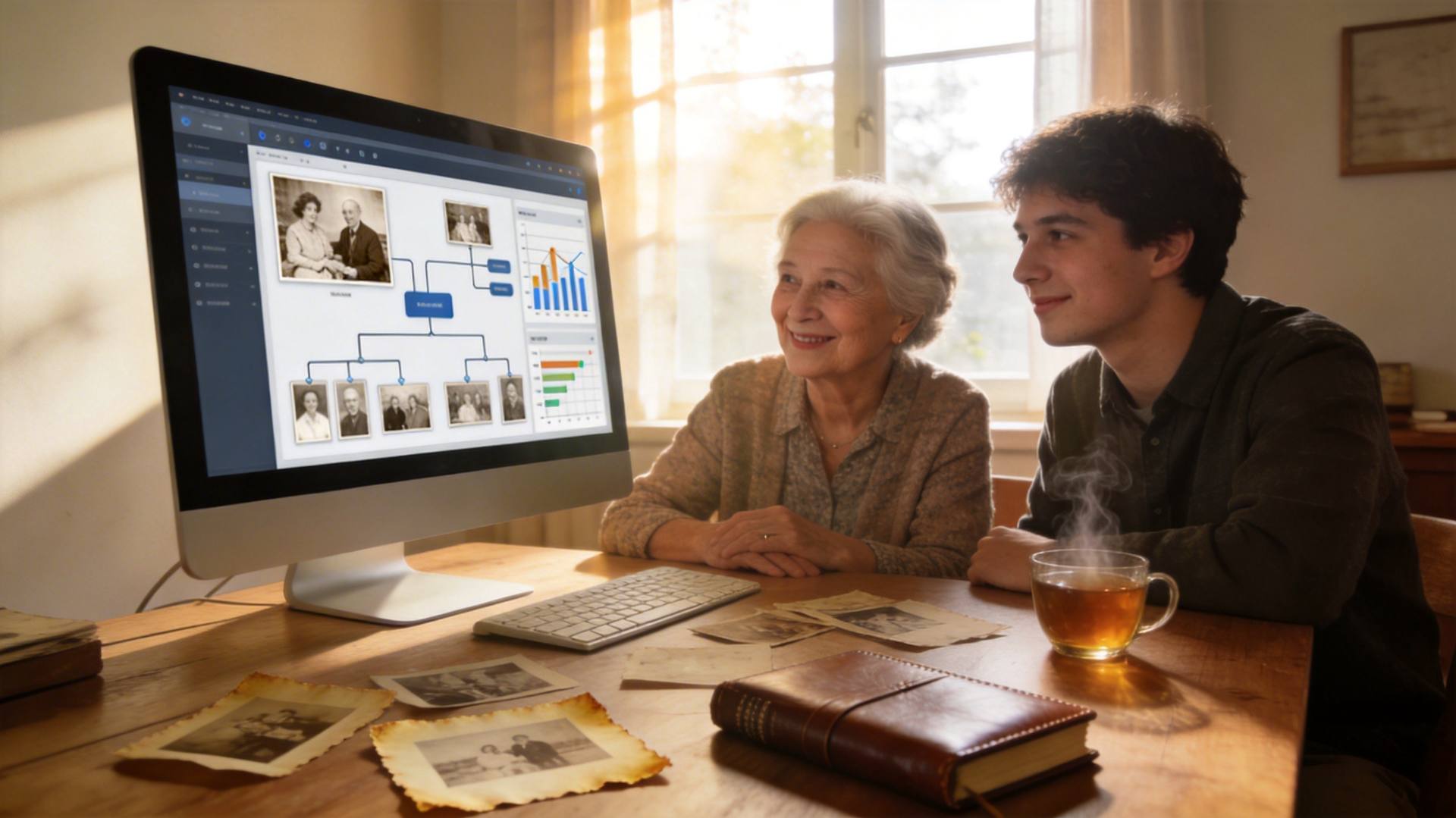
It was a rainy Tuesday afternoon when I sat with Margaret in her sunroom, the sound of steady droplets tapping against the windowpanes. She was in her late seventies, a retired librarian with stage‑four lung cancer, and she had called me in not to discuss her will or her bank accounts—those were already neatly filed—but because she was troubled by a different kind of emptiness. “Matthew,” she said, her voice barely above a whisper, “my grandchildren know my Netflix password. But they don’t know why I love the smell of old books, or what I whispered to their grandfather the night he proposed. What happens to those things?”
That question, so simple and yet so profound, is why I’ve spent the last decade helping people like Margaret fill the gap between what we traditionally think of as “estate planning” and what I call “heart‑planning.” In the digital age, we’ve become oddly focused on the keys—passwords, PINs, account numbers—and forgotten about the treasure chests those keys are meant to open. A password grants access to a photo album; it doesn’t tell your great‑granddaughter why you took those photos, what you felt that day, what the laughter sounding in the background meant.
So, if you’re walking this journey—whether as a patient, a caregiver, or someone simply thinking ahead—here is a different kind of checklist. One that goes beyond the practicalities and touches the parts of you that no spreadsheet can capture.
1. Your Voice, Not Just Your Words
We leave behind letters, journals, social‑media posts. But the human voice carries something text cannot: timbre, warmth, the slight crackle of emotion, the pauses that speak louder than sentences. I remember a client, David, who recorded himself reading his daughter’s favorite childhood bedtime story. He didn’t just read the words; he imitated the silly voices he’d always done, paused at the same dramatic moments, even chuckled at the same inside jokes. When he passed, his wife told me their now‑grown daughter would play that recording whenever she missed him. “It’s like he’s right here, tucking her in again,” she said.
How to start: • Set aside a quiet hour. Use your phone’s voice‑memo app—no fancy equipment needed. • Don’t aim for perfection. Just talk. Tell a story from your childhood, recount how you met your partner, describe your first home. • Label each file clearly: “Grandpa telling the camping mishap story – June 2025.” • Store the files in a dedicated folder on your cloud drive, and share the location with a trusted family member.
2. The “Why” Behind Your Belongings
Anyone can inherit a teacup. But inheriting the story of how your grandmother carried that teacup across the ocean, how it survived a shipwreck, how she drank from it every morning while writing poetry—that turns an object into a legacy. I worked with a young breast‑cancer survivor, Lena, who created a simple digital catalog. She photographed every item that mattered to her—a worn‑out hiking boot, a pressed flower in a dictionary, her mother’s wedding ring—and next to each photo, she typed or recorded a short explanation: why it was important, what memory it held, what she hoped the next keeper would feel.
The catalog wasn’t long. But it was dense with meaning. Her brother later told me, “I never knew that boot was from the hike where she decided to become a nurse. Now I look at it and see her courage, not just old leather.”
How to start: • Pick five objects that hold deep personal significance. • Take clear, well‑lit photos with your phone. • For each, write or speak a paragraph about its story. Be specific: where it came from, who gave it, what moment it symbolizes. • Compile the photos and stories into a simple document or a private online album.
3. Your Values and Life Lessons, Not Just Your Assets
Estate plans distribute assets. A legacy plan distributes wisdom. What are the principles that guided your hardest decisions? What did you learn about resilience, kindness, or forgiveness that you want to pass down? I often encourage people to write a “letter of values”—a single document that spells out the non‑material inheritance.
One of the most moving letters I’ve ever read came from Carlos, a father with terminal stomach cancer. He didn’t write about money or property. He wrote about the afternoon he taught his son to ride a bike, how he learned that sometimes you have to let go even when you’re terrified they’ll fall. He tied that to larger lessons about trust, independence, and love. His son, now a father himself, told me that letter is the first thing he reads when he faces a tough parenting moment.
How to start: • Reflect on three core values that have shaped your life (e.g., integrity, curiosity, compassion). • For each value, recall a personal anecdote that illustrates it—a time you lived it, a time you struggled with it, a time it saved you. • Address the letter to your children, grandchildren, or future generations. Keep the tone conversational, like you’re sitting across from them. • Store it with your other important documents, and mention its existence in your will or advance directive.
4. Your Digital Footprint: Curating, Not Just Deleting
We often worry about cleaning up our digital presence—deleting embarrassing posts, closing old accounts. But what if, instead of erasing, you curated? What if you left behind a intentional digital trail that tells the story you want told? This isn’t about crafting a perfect image; it’s about highlighting the moments that reveal who you truly are.
A patient of mine, Sophie, used a simple tool to “tag” her social‑media posts with private notes. On a photo of her hiking a mountain trail, she added a note visible only to her family: “This was the day after my third chemo. I was so weak I almost turned back. But the wildflowers were in bloom, and I thought, if they can push through the cold soil, I can push through this.” That single note transformed a generic vacation photo into a testament of her strength.
How to start: • Go through your photos, social‑media profiles, blog entries. • Select 10‑20 that represent pivotal moments, ordinary joys, hard‑won victories. • Add captions or voice‑over comments that explain the context, your feelings, what you learned. • Consider creating a private digital scrapbook using a service like Google Photos or Apple’s Memories, and share access with your loved ones.
5. The Unfinished Conversations
Sometimes the most important things we leave behind are the questions we didn’t get to answer, the conversations we didn’t finish. I’ve started asking clients: “What do you wish your parents had told you? What do you want your children to ask you?” Then we create a space for those dialogues, even if they happen posthumously.
James, a hospice patient with melanoma, recorded a series of short videos answering questions his teenage sons might have in the future: “How did you deal with peer pressure?” “What should I look for in a partner?” “How do I know if I’m happy?” He didn’t pretend to have all the answers; he just offered his perspective, flawed and human. Those videos became a living conversation that continues to evolve as his sons grow older.
How to start: • Make a list of questions you wish you could answer for your loved ones. • Record your responses—on video if you’re comfortable, or audio if that feels more natural. • Organize them by theme: relationships, career, faith, adversity. • Let your family know these exist and where to find them.
Closing Thought: Legacy as a Verb, Not a Noun
Legacy isn’t something you leave; it’s something you do, every day, in the stories you tell, the patience you show, the values you live. Margaret, the librarian, ended up recording not just her favorite memories, but also the sound of her turning the pages of her most beloved novel. She wanted her grandchildren to know the particular rustle that meant she was fully absorbed, a sound that had comforted her through many long nights.
When she finished, she looked at me, tears in her eyes but a smile on her face. “Now,” she said, “they’ll know the music behind the silence.”
That, perhaps, is the ultimate item on the checklist: not just what you leave behind, but the music you help others hear long after you’re gone.
—Matthew Miller
© Matthew Miller • Published on CancerCura Community • All rights reserved.
This article provides guidance on preserving intangible digital legacy—stories, values, voice recordings, and personal artifacts—for future generations.