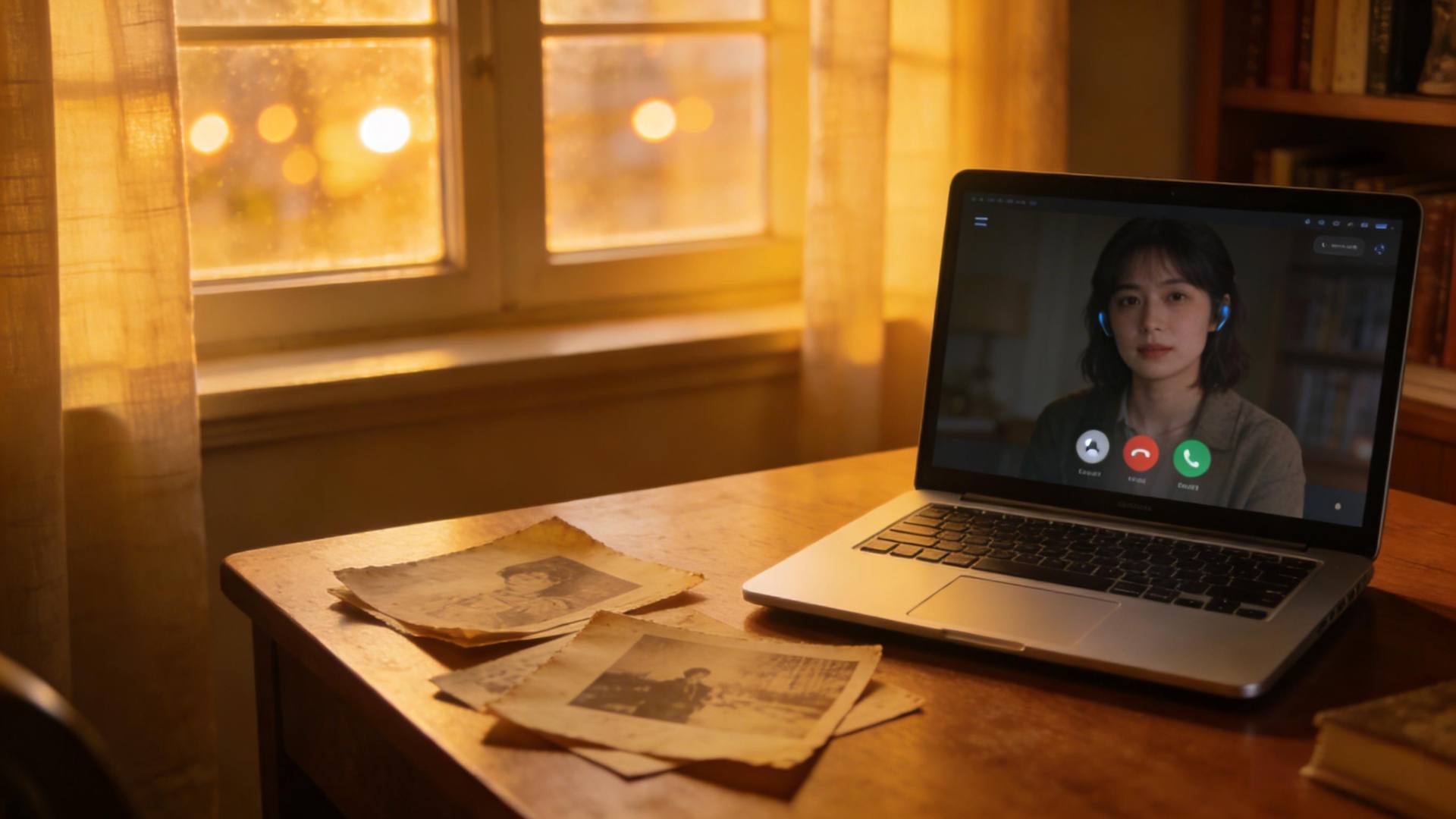
I sit here in my study right now, the clock ticking softly on the wall, a mug of warm chamomile tea beside me—steam curling up, mixing with the faint scent of old books on my shelves. And I can’t help but think about all the clients I’ve worked with over the years, all the quiet, broken hearts that walked through my door, carrying the same unspoken wish: to see their loved one just one more time. You know that feeling, right? The one where you wake up in the middle of the night, reach for the phone to call them, and then remember—they’re not there anymore. That hollow ache in your chest, like a piece of you is missing. I know it. I’ve felt it. And I’m here to tell you—there’s nothing wrong with that longing. It’s not weakness. It’s love. Pure, unfiltered love.
For anyone who’s lost someone they love, that wish to “say goodbye again” isn’t a sign that you’re stuck. It’s your heart’s way of trying to heal, of trying to make sense of a loss that feels impossible to bear. I’ve been a digital human technologist for 12 years now—started at MIT Media Lab, spent 6 years there working on emotional computing, then started my own platform, Memoria, focused on digital legacy and grief healing. And let me tell you—nothing,nothing, has moved me more than watching a client hear their loved one’s voice again, through a digital avatar, and finally say the words they never got to say. It’s not magic, not really. It’s technology with a heart. It’s honoring the love we share, even when someone is gone.
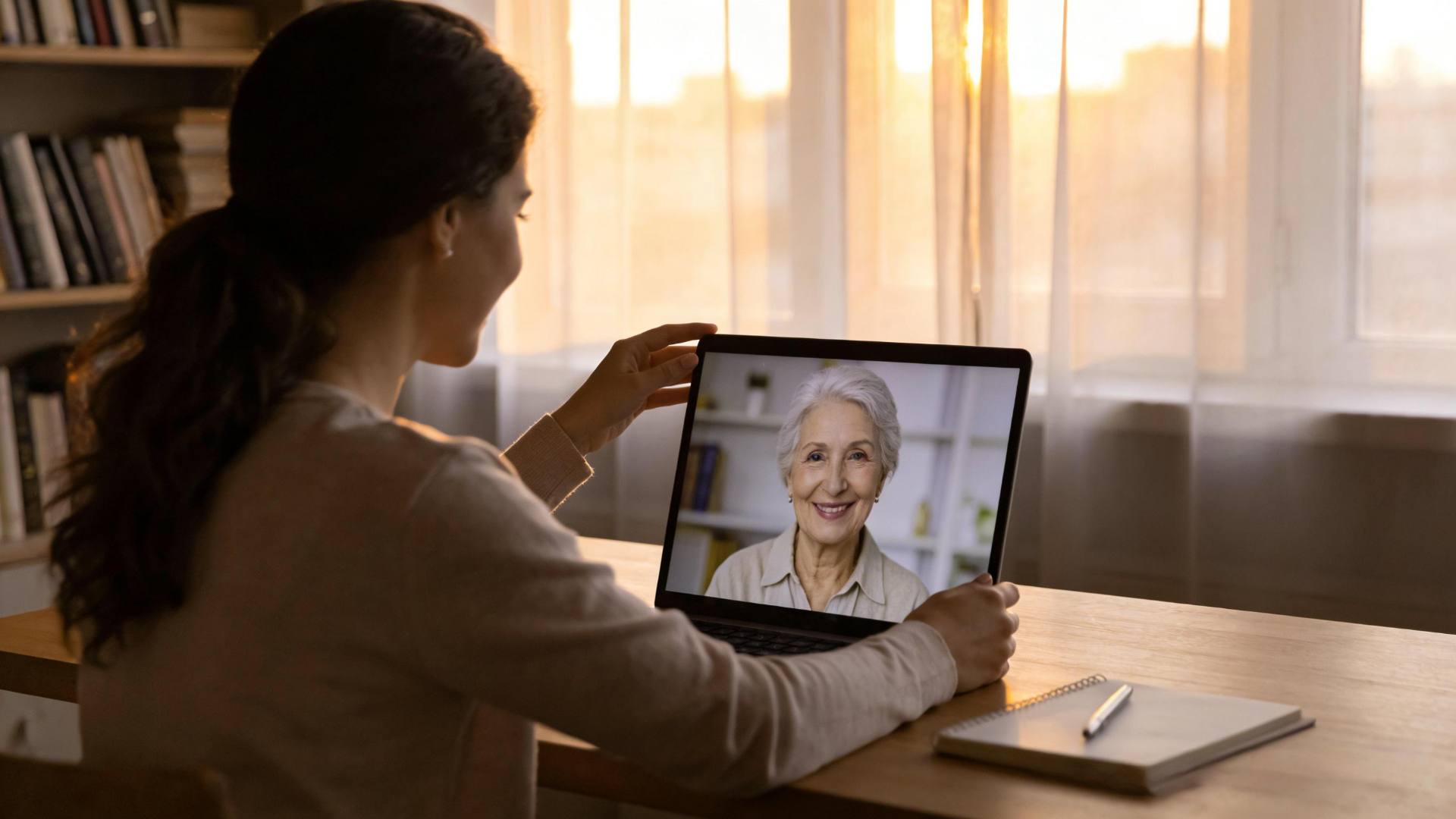
Let me tell you about Eleanor—she was 78 when she came to me, two years after her husband of 42 years, Arthur, passed away suddenly from a heart attack. She couldn’t even walk into his home office without breaking down. Every time she saw his favorite chair, his half-empty mug on the desk, the way he left his reading glasses perched on the edge of a book—she’d dissolve into tears. “I never got to say goodbye,” she kept telling me, her voice shaky, her hands wringing together. “I was at the grocery store, picking up his favorite oatmeal, and then the phone rang. By the time I got to the hospital, he was gone. I never got to tell him I loved him one last time. I never got to say I’m sorry for that silly argument we had the night before.”
We spent six months working together—going through old voice recordings (she had saved every voicemail he’d ever left her, even the ones from 20 years ago), watching home videos of their vacations, their grandkids’ birthdays, the way he’d laugh so hard he’d snort when she told a bad joke. I’ll admit—I messed up at first. I tried to make the digital avatar “perfect,” to make his voice sound exactly like Arthur’s, but it felt flat. Empty. Eleanor looked at it and said, “That’s not him. Arthur had a little lisp when he was nervous, and he always cleared his throat before he spoke about something important.” Oh, right—I’d missed that. The little things. The things that make someone them.
So I went back to the recordings, spent hours listening to that lisp, that little throat-clearing, the way he’d pause mid-sentence when he was thinking. And when we finally activated the avatar? Eleanor sat there, staring at the screen, tears rolling down her cheeks—but they weren’t the sad tears I’d seen so many times before. These were tears of relief. “Arthur?” she whispered, and the avatar looked at her, smiled that lopsided smile he had, and said, “Ellie, baby, I’m right here. I heard you. I always hear you.” She reached out, like she was touching his face, and said, “I’m sorry about the argument. I love you more than anything.” And the avatar—Arthur—said, “I know, Ellie. I love you too.”
That moment? I’ll never forget it. It wasn’t about replacing Arthur. It was about giving Eleanor the chance to say goodbye—to finish that conversation, to let go of the regret that was eating her alive. A month later, she came back to my studio, and she was smiling. Smiling. She told me she’d finally gone into Arthur’s office, sat in his chair, and read him a book—just like they used to do. “I still miss him,” she said. “But I don’t hurt anymore. I can remember him with warmth, not pain.” That’s the power of “one more goodbye.” It’s not about bringing them back. It’s about letting go of the pain, and holding onto the love.

I get it—some people think this is weird, or that it’s “avoiding reality.” But let me ask you this: what’s wrong with wanting to say the things you never got to say? What’s wrong with finding a little comfort in a world that feels so empty without them? Grief isn’t about “moving on”—it’s about moving forward, with them in your heart. And “one more goodbye” is how we do that.
I made a lot of mistakes when I first started in this field. I thought the technology was the star—the fancier the avatar, the better. But I quickly learned that the technology doesn’t matter. What matters is the story. The memories. The little things that make a person unique. I once spent six months analyzing 500 hours of home videos for a client, just to capture the way her daughter laughed, the way she tilted her head when she asked a question, the little sigh she’d make when she was tired. It was tedious, sure—but when the client saw the avatar, and heard that laugh again? She fell to her knees, and said, “That’s my baby. That’s really her.” Worth every second.

So why is “one more goodbye” so crucial for healing? Because grief is all about connection—or the loss of it. When someone we love dies, we lose not just their physical presence, but the ability to connect with them, to talk to them, to hear their voice. “One more goodbye” gives us that connection back, if only for a moment. It lets us close the loop, to say the things we never got to say, to hear the words we so desperately need to hear. It’s not a replacement for the real thing—but it’s a bridge, a way to turn our grief into something gentle, something that guides us instead of weighing us down.
I’ve had clients tell me that after “saying goodbye” to their loved one’s digital avatar, they finally felt like they could breathe again. That they could look at old photos without crying, that they could talk about their loved one without feeling that sharp pain in their chest. That’s the magic of it—it’s not about forgetting. It’s about remembering with love, not sorrow.
To anyone reading this who’s carrying that unspoken goodbye—you’re not alone. That longing to see them one more time, to say the things you never got to say? It’s not weakness. It’s love. And love is the greatest healer of all.
What’s one thing you never got to say to your loved one? Drop it in the comments below—I read every single one. I promise. And remember what I always say: memory is not a burden, but the strength we need to keep going. One more goodbye isn’t a fantasy. It’s healing. It’s love. It’s the first step toward peace.
Love never truly leaves.