
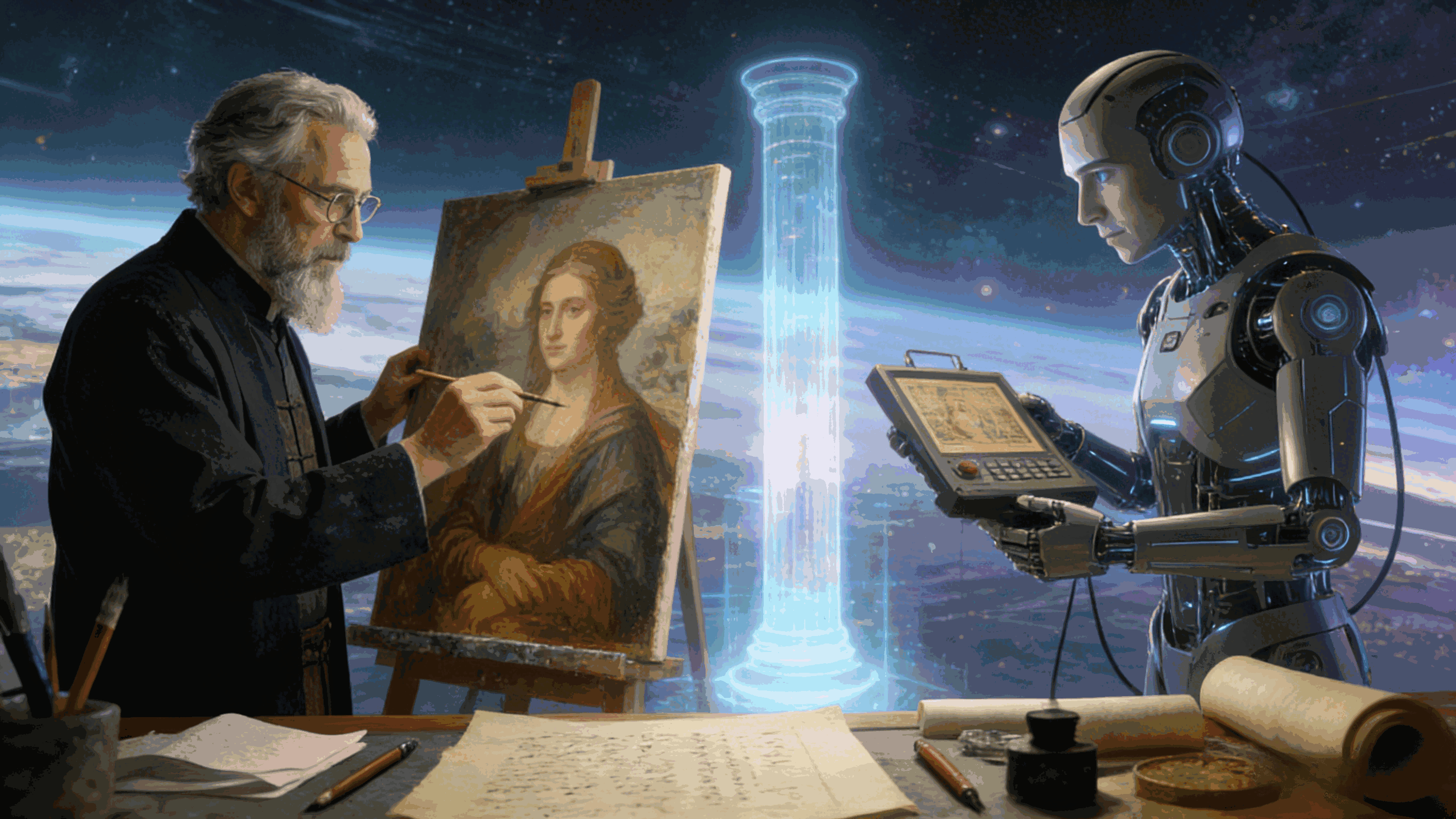
I. New Scenario Practice: Diverse Implementation of Digital Humans Empowering Civilizational Transmission
The core value of digital humans in these scenarios is no longer emotional comfort, but precise preservation and efficient transmission of knowledge, crafts, and civilization, allowing the deceased's lifetime accumulation to break through time limitations and benefit more descendants:
- Academic Thought Transmission: Digital Humans Replicate Deceased Scholars, Build Cross-Temporal Discussion Bridges Top universities and research institutions are gradually applying digital human technology to the thought transmission of deceased academic giants. Besides the Arnold Toynbee digital human replicated by Oxford University, Harvard University also created an exclusive digital human for the deceased economist Milton Friedman. The team organized a large amount of materials such as teaching videos, manuscript papers, and public debate recordings of Friedman, deeply deconstructed his academic logic, thinking methods, and expression habits through AI algorithms, finally achieving that "Digital Human Friedman" could give analytical views on current economic issues based on his own theoretical system. For students, this is no longer passive reading of works, but active dialogue with academic masters, quickly grasping core ideas; for researchers, digital humans can assist in organizing scholars' incomplete research threads and provide directions for subsequent topics. This model has been promoted in philosophy, sociology, and other fields, allowing classic academic thought to break free from time constraints and continue to influence later generations.
- Protection of Endangered Crafts: Digital Humans Replicate Masters, Preserve Civilization Codes About to Disappear Facing a large number of niche crafts that are about to disappear with the death of masters, digital humans have become a key tool for "living transmission". In southern Spain, after the death of Ms. Ana, a legendary master of flamenco dance, her unique dance steps and emotional expression techniques were about to be lost. The local cultural department joined with an AI team and spent half a year replicating Ana's digital human—through high-precision motion capture restored the details of her dance steps, combined her teaching recordings to embed craft key points, and even accurately replicated her eyes, hand gestures, and other emotional transmission methods when dancing. Today, this digital human is placed in the Flamenco Cultural Museum, not only providing one-on-one dance step teaching for learners but also explaining the cultural meaning behind each movement through interactive demonstrations. Similarly, traditional washi paper crafts in Kyoto, Japan, and ancient silver forging techniques in Mexico have all preserved core craft details through replicating digital humans of deceased masters, giving new life to endangered crafts.
II. Core Points of Scenario Implementation: Precise Replication and Compliant Transmission
The implementation of this type of digital human must consider both "content precision" and "legal compliance", must ensure both authentic transmission of knowledge and crafts and maintain ethical and legal bottom lines:
1. Precise Replication: Comprehensive Restoration from "Form" to "Spirit"
Unlike emotional digital humans, the core need of academic and craft digital humans is "precision", must achieve comprehensive replication from external form to internal core:
- Material Deepening: Need to collect massive authoritative materials. Academic types need to cover works, papers, teaching videos, interview records, etc., to ensure the digital human's thought logic is consistent with the scholar themselves; craft types need to include movement demonstrations, craft formulas, detail breakdown videos, etc., to precisely restore craft key points.
- Professional Empowerment: Invite experts in this field to participate in digital human training. Academic types are reviewed by relevant scholars on whether the digital human's viewpoint output logic is correct; craft types are calibrated by experienced practitioners on movements and process details to avoid deviations and ensure transmission accuracy.
- Interaction Optimization: Design interaction modes according to scenario needs. Academic types support multi-dimensional questions and viewpoint discussions; craft types support step-by-step demonstrations and detail magnification to improve user experience and transmission efficiency.
2. Compliant Transmission: Maintain Legal and Ethical Boundaries
This type of digital human involves issues such as knowledge copyright and craft ownership, must strictly follow the laws and industry norms of various countries:
- Copyright and Ownership: Materials such as works and papers used by academic digital humans must obtain authorization from copyright holders or heirs, clarify the copyright ownership of digital human output content; craft types need to confirm whether crafts involve family transmission or community ownership, obtain relevant parties' consent before replication and dissemination.
III. Scenario Value Extension: Digital Humans Open New Paradigm of Civilizational Transmission
The emergence of this type of digital human not only solves the transmission problems of academic thought and endangered crafts but also opens a new paradigm of civilizational transmission:
- Lower Transmission Threshold: Digital humans can break geographical and temporal limitations, allowing global learners to access top academic thought and niche crafts without being limited by offline teaching resources, greatly improving transmission coverage.
- Achieve Dynamic Updates: Based on AI technology, digital humans can be optimized combining new academic research and craft innovations, retaining core essence while adapting to era needs, making transmission no longer an immutable replication.
- Awaken Cultural Attention: Through this novel form of digital humans, make more people pay attention to endangered crafts and classic academic thought, stimulate public attention to cultural transmission, and inject new vitality into civilizational continuation.
IV. Frequently Asked Questions (FAQ)
1. Will replicating digital humans of deceased scholars violate their copyright?
As long as authorization is obtained from copyright heirs or relevant institutions and used for non-commercial academic transmission scenarios, it complies with legal provisions. Must clearly label material sources, and at the same time ensure that digital human output viewpoints do not deviate from the scholar's intent, do not falsify their core thoughts, to avoid copyright disputes.
2. Can digital humans transmit crafts? Can they replace real teaching?
Cannot completely replace. Digital humans can precisely replicate craft details and provide standardized demonstrations, are important tools for entry learning and craft preservation, but real teaching can transmit emotions and correct personalized problems. The two complement each other to achieve better transmission effects.
3. Is the production cost of this type of digital human high? Can ordinary institutions afford it?
Costs are higher than ordinary emotional digital humans, but are gradually decreasing with technological popularization. Academic and craft digital humans, due to the need for massive material processing and professional calibration, have production costs usually ranging from tens of thousands to hundreds of thousands of yuan, suitable for institutions such as universities, cultural departments, and non-profit organizations to bear. Some countries also provide special subsidies for cultural transmission.
4. How to ensure that the knowledge and crafts transmitted by digital humans are accurate?
The core is "double review": On one hand, collect authoritative and complete materials, avoid fragmented information causing deviations; on the other hand, invite experienced experts in this field to fully participate, from material screening, digital human training to final implementation, conduct multiple rounds of review and calibration to ensure the accuracy of transmitted content.
V. Summary and Call to Action
When digital humans enter new scenarios such as academic transmission and protection of endangered crafts, they are no longer just technological products but civilizational links connecting the past and future. They allow deceased scholars' thoughts to dialogue across time and space, allow endangered crafts to break free from the crisis of disappearance, and inject gentle technological power into civilizational transmission. The value of **digital humans** is never limited to emotional comfort alone, but more in allowing those precious human wisdoms and civilizational achievements to be permanently transmitted, benefiting generation after generation of descendants.
If you care about cultural transmission and academic research, or have unique insights on the application of digital humans in these fields, welcome to share your views in the comments. You can also click the link below to learn more about cases and practical guides of digital humans empowering civilizational transmission, together contributing to the continuation of precious civilizations. Remember to share this article so more people can see the diverse value of digital humans beyond emotions.