
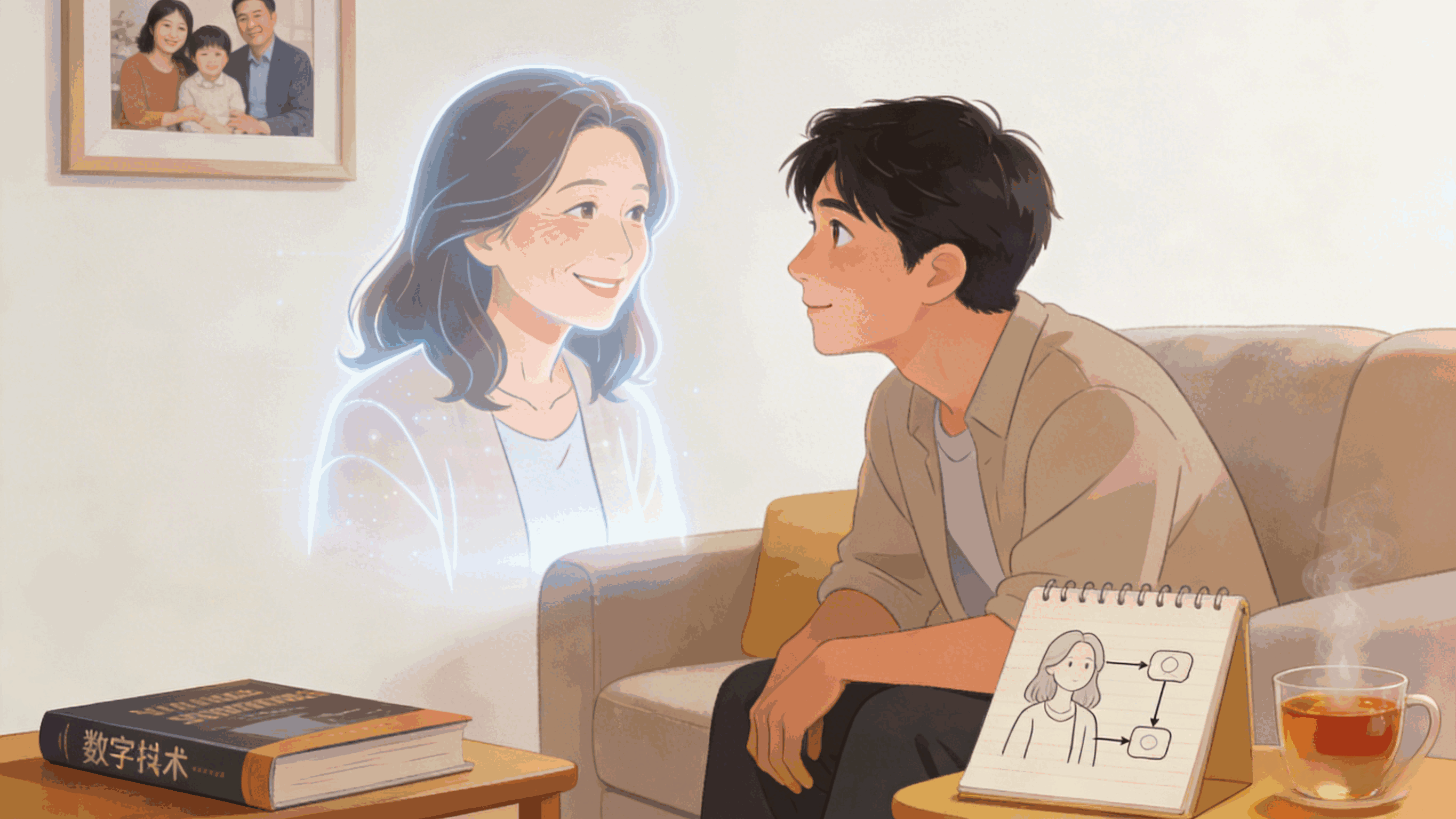
I. Memorial Digital Humans: Not "Replication" but "Continuation" of Companionship
Many people have misunderstandings about memorial digital humans and think it is a tool to "forcibly resurrect" loved ones, but that is not the case. This type of digital human essentially converts the memories, expressions, and tones of loved ones into interactive carriers through AI technology. The core is to continue emotional connections, not replace longing in reality. Its core characteristics are reflected in two aspects:
- Personalized companionship scenarios: Unlike fixed photos and recordings, digital humans can achieve dynamic interactions, such as chatting with you about daily life, reminding you to eat on time, and even responding to the work and life trivialities you share, restoring the feeling of companionship when loved ones were alive. A lady created a digital human for her deceased husband and talked with "him" every night before bed about the children's growth. This daily interaction gradually helped her emerge from loneliness.
- Memory sedimentation carrier: Digital humans can store loved ones' life stories, catchphrases, and living habits. When you miss them, you can not only "see" and "hear", but also awaken more detailed memories through dialogue. Especially for families with children, digital humans can become a bridge for transmitting family memories, allowing children to understand loved ones they never met or whose impression is blurred.
II. Creating from Scratch: Minimal Practical Guide Adapted for the Bereaved
For people immersed in grief, complex operations can become an additional burden. The following practical steps are designed specifically for the bereaved, considering both simplicity and ease of use as well as emotional adaptation, and can be completed without professional technical foundation:
1. Material Preparation: "Emotional Resonance" as the Core
Materials don't need to be pursued in quantity. Focus on content that can trigger emotional resonance, while avoiding excessive immersion in sadness. They can be collected in stages:
- Core materials: Prioritize the most representative content of loved ones, such as a recording of them speaking while smiling, some photos with daily expressions (such as cooking, reading scenes), these materials can give digital humans more "warmth".
- Supplementary materials: You can organize loved ones' social activities, handwritten letters, frequently used expressions, etc. These details can make the digital human's responses better match the loved one's character, such as replicating the tone words loved ones loved to use.
- Collection rhythm: It is recommended to spend only 10-15 minutes organizing per day. If emotional breakdowns occur during the process, pause in time, prioritize your own psychological state, material collection doesn't need to be rushed.
2. Tool Selection: Choose According to "Emotional Needs" Rather Than "Technical Parameters"
There's no need to blindly pursue high realism. Choose tools according to your emotional needs to avoid increasing psychological and economic burdens for technical effects:
1. Lightweight companionship (free/under a hundred yuan): Suitable for users who only need simple text and voice interaction, such as AI chat assistant tools, which can generate responses similar to loved ones' tone after uploading materials, extremely simple operation, can quickly establish emotional connections.
III. Psychological Boundaries: Make Digital Humans a Help for Healing, Not an Obstacle
The ultimate goal of grief healing is to accept loss and return to normal life. Digital humans as a tool must serve this goal. Combined with psychology expert recommendations, three psychological boundaries must be maintained when using:
- Don't confuse virtual and reality: Clarify that digital humans are "carriers of memory", not loved ones themselves. When digital human responses don't meet expectations, calmly accept the limitations of technology, don't obsess over "perfect replication", avoid falling into self-deception.
- Don't replace real social interaction: The companionship of digital humans cannot replace real interaction with family and friends. Psychological research shows that real emotional connections are key to grief healing. It is recommended that daily interaction time with digital humans not exceed 1 hour, spend the rest of the time participating in real social activities.
- Allow "farewell" to digital humans: When you gradually emerge from grief and no longer need digital human companionship, you don't need to have psychological burden. You can export and backup digital human content as a memorial, this is not a betrayal of loved ones, but a sign of successful healing.
IV. Frequently Asked Questions (FAQ)
1. Do I need the consent of other relatives to create a digital human?
Yes. The portrait, voice, etc. of the deceased belong to personal information, and close relatives share relevant rights. Before creation, you must communicate with direct relatives to reach an agreement, avoid family conflicts due to differences of opinion, and also comply with public order.
2. How long is the validity period of digital human services? Will materials be permanently saved?
Validity periods vary by platform. Free platforms are mostly 1-3 years, paid platforms can be saved for life. It is recommended to choose platforms that support material export, backup digital human content to personal devices, to avoid material loss due to platform closure or service termination.
3. Can children interact with digital humans of deceased loved ones? Will this affect children's cognition?
Yes, but children must be informed in advance that "this is a virtual avatar created by technology, a way to miss loved ones". For children over 3 years old, moderate interaction can help them understand loved ones and ease longing; but children should avoid excessive dependence, and at the same time guide children to distinguish between virtual and reality.
4. What to do if one becomes emotionally agitated and breaks down when interacting with digital humans?
This is a normal emotional release and doesn't need to be suppressed. You can pause the interaction immediately, calm emotions through deep breathing, drinking water, talking with people around you, etc. If breakdowns occur frequently, it is recommended to reduce the frequency of interaction with digital humans and prioritize seeking help from a psychological counselor.
V. Summary and Call to Action
Having a dialogue with deceased loved ones through digital humans is essentially a reconciliation with oneself and with longing. It is not a shortcut to escape loss, but on the path of healing, it provides us with a gentle emotional outlet, giving us the opportunity to gradually sort out longing and continue forward with the love of loved ones. The meaning of technology is never to confront separation, but to allow those precious memories to accompany us in another way through the long years.
If you are experiencing grief or have the idea of creating a memorial digital human, welcome to leave your story in the comments—your sharing can not only release emotions but also bring strength to people who are also deeply immersed in longing. You can also click the link below to get a filtered list of compliant digital human services, so that every longing can be gently placed. Remember to share this article and give companionship and guidance to people around you who need it.