
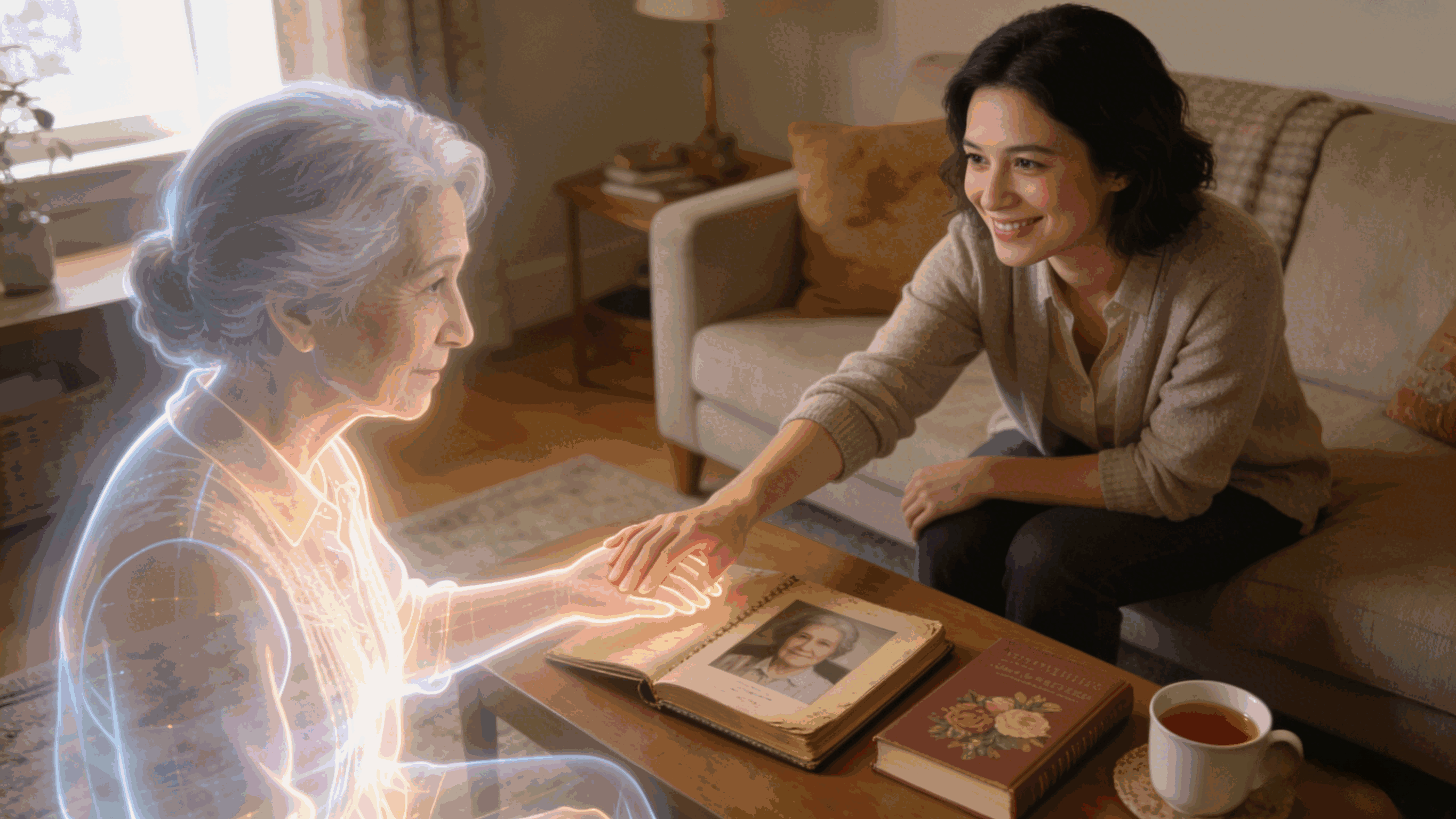
I. Breaking Cognitive Misconceptions: Digital Humans Are Not "Obsession" but Gentle Healing Media
When mentioning interaction with deceased loved ones through digital humans, many people will label it as "obsession" or "inability to accept reality". But in fact, from a psychological perspective, reasonable use of digital humans can become an effective aid for grief healing. The key lies in clarifying cognitive boundaries:
- It is a supplement to "farewell", not an excuse for "escape": Many bereaved people, due to unexpected separations, leave many unspoken words and unfinished things, forming psychological obsessions. Digital humans provide an "expression outlet", just like Mr. Zhang from Shanghai, who through digital humans told his deceased mother the good news of his entrepreneurial success. After fulfilling the wish to "share", he was more able to calmly accept separation. This kind of interaction is not escaping reality, but completing a psychological-level farewell through emotional closure.
- It is a "continuation" of memory, not an illusion of "replacement": Digital humans cannot replicate the consciousness and soul of loved ones—this is an indisputable fact. What is truly valuable are the exclusive memories they carry—an exclusive admonition, an iconic gesture. These details can awaken the warm moments of the living with loved ones, giving longing a concrete carrier, rather than falling into the misunderstanding that "virtual replaces reality".
- It is "personalized" healing, not a "unified" template: Each person's grief is unique, and healing methods don't need to be uniform. Some people are suitable for maintaining "daily companionship" through digital humans, some only need to use digital humans to preserve a memory. As long as it serves psychological rehabilitation, there's no need to be bound by others' evaluations.
II. Balance Between Emotions and Ethics: When Memorializing with Digital Humans, Maintain These 3 Bottom Lines
When technology touches the softest family love, the balance between emotional needs and ethical norms becomes the core issue. Especially for the bereaved, maintaining the bottom line can make digital humans truly become warm companionship, not potential troubles:
1. Respect the Deceased: Don't Consume, Don't Alienate
The core of memorialization is reverence and longing, not traffic or profit. When creating digital humans, you must adhere to the principle of "not commercial, not speculative", refuse to use digital humans for short video exhibitions, commercial promotion, etc., do not arbitrarily reveal interaction content with digital humans. This is both respect for the dignity of the deceased and appreciation for your own emotions. At the same time, you must be guided by the deceased's personality and wishes during their lifetime, do not arbitrarily endow digital humans with traits that don't correspond to the deceased's true nature, avoid alienating the image of loved ones.
2. Care for Yourself: Don't Depend, Don't Indulge
The ultimate goal of grief healing is to return to normal life with longing, not to indulge in virtual connections. Psychology experts warn that when using digital humans, you must establish clear psychological boundaries: don't regard digital humans as the only emotional solace, don't reject real social interaction because of interaction with digital humans. When you find yourself overly dependent or even confusing virtual and reality, pause in time, seek professional psychological counseling when necessary. True healing is digital humans accompanying us through the lows, not making us stay in the lows.
3. Consider Family: Don't Ignore, Don't Force
Family love is not one person's business. When memorializing loved ones with digital humans, you must also consider the feelings of other family members. Some relatives may not be able to accept this form of digital humans. In this case, you should not try to persuade or show forcefully, but respect each other's emotional perceptions. If multiple relatives jointly own deceased materials, you must fully communicate and reach consensus before creation, avoid family conflicts due to differences in views, making memorial behavior a trigger that harms family love.
III. Real Cases: How Digital Humans Gently Illuminate the Path of Grief
Beyond theory, those real stories can better make people understand the meaning of digital humans for the bereaved. These cases don't have earth-shattering technological breakthroughs, but contain the simplest emotional power:
- Case 1: Using Digital Humans to Transmit Family Memories: A retired teacher's husband was an old traditional Chinese doctor who left many folk remedies and medical insights during his lifetime, but didn't have time to fully pass them on to descendants. She replicated her husband's image and voice through digital humans, allowing digital humans to combine memory materials to tell descendants the stories behind folk remedies and medical concepts. Today, digital humans are not only her emotional solace but also a carrier for family cultural transmission, allowing the wisdom and character of loved ones to continue.
- Case 2: Using Digital Humans to Fulfill Children's Wishes: 5-year-old girl Emma often cried at night after her father's death, saying "I want to say goodnight to daddy". Emma's mother created a lightweight digital human for her husband, and every night before bed, the digital human would say an exclusive goodnight greeting to Emma and tell a story that the father often told during his lifetime. After a while, Emma gradually adapted to nights without her father. Digital humans became a gentle connection between the child and father, alleviating the trauma of childhood loss.
- Case 3: Using Digital Humans to Reconcile with Oneself: 30-year-old James had a gap with his father for many years during his lifetime due to misunderstandings. After his father's death, he was always mired in guilt and regret. Through digital humans, James simulated a "dialogue" scene with his father and expressed the apology and longing hidden in his heart. Although he knew this was a technical simulation, this "dialogue" made him let go of the obsession, learned to reconcile with the past, and also understood to cherish the loved ones still around him.
IV. Frequently Asked Questions (FAQ)
1. Is it a psychological problem to develop emotional dependence on digital humans?
No. Having emotions like loneliness and pain after loss, yearning for emotional solace is a normal psychological reaction. Dependence on digital humans is essentially a projection of longing for loved ones. As long as this dependence doesn't affect normal life, social interaction, and work, there's no need to worry. If situations occur where one cannot separate from digital humans or rejects real interaction, adjust interaction frequency in time or seek help from a psychological counselor.
2. Will creating a digital human of a deceased loved one be morally criticized?
No. Memorializing loved ones is human nature. Digital humans are just a new form of memorialization, with no right or wrong in themselves. As long as you adhere to the principles of respecting the deceased, not commercial, not affecting others, you don't need to care about others' moral evaluations. True morality is not to disappoint your own emotions, nor to desecrate the dignity of the deceased.
3. Can digital humans fully replicate loved ones with technological development?
Currently, this is not possible. Even if technology can accurately replicate the appearance, voice, and tone of loved ones, it cannot replicate their consciousness, thinking, and soul—those emotions hidden in details, random reactions, all of this is difficult for technology to simulate. We should rationally view the limitations of technology, not pursue "perfect replication", but focus on the memory and emotional value that digital humans carry.
4. What to do if you no longer want to use digital humans?
You can export and backup materials, then cancel the platform account, delete digital human content, or save backup materials as a memorial. The handling method doesn't need to have psychological burden. This is not a betrayal of loved ones, but a manifestation of healing results, meaning you can already calmly move forward with longing without needing to seek solace through digital humans.
V. Summary and Call to Action
Digital humans are not a "panacea" for grief healing, nor an "obsession" worth criticizing. They are just a new possibility that technological development provides for longing—allowing those unspoken words to have a place to express, allowing those precious memories to have a place to store, allowing the path of healing to have gentle companionship. What truly matters is never digital humans themselves, but that through them, we learn to reconcile with separation, coexist with longing, and face ourselves calmly.
If you are also struggling with grief or have many doubts about memorializing loved ones with digital humans, welcome to share your story and questions in the comments. Every longing deserves respect, every healing method deserves understanding. You can also click the link below to explore more grief healing resources suitable for you. May you gradually emerge from the shadows in time and gentle companionship, with the love of loved ones, continue toward your own life. Remember to share this article and give strength and warmth to people who also need solace.