I. That Unspoken Longing, Digital Humans Place It Neatly for Us
What's most exhausting after loss is never the dramatic pain, but countless unexpected moments: when you eat a familiar dish, pass a street you walked together, encounter a problem and want to talk to someone, you suddenly remember that the closest person is no longer there. This fragmented longing often finds no suitable outlet, and digital humans become that "quiet listener".
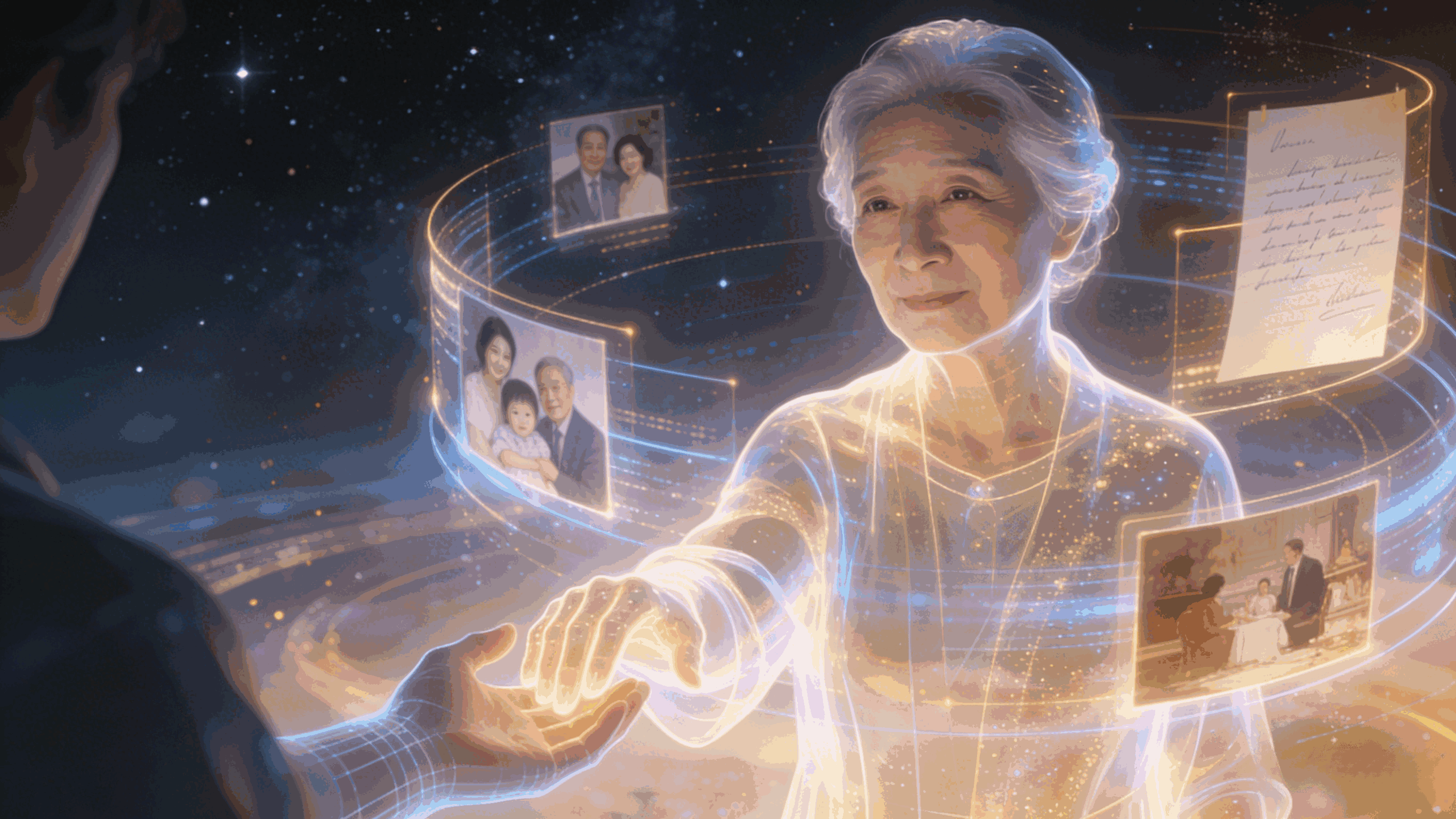
It doesn't urge us to let go, nor does it judge our weakness. It just accompanies us, letting us express one by one those unspoken words, those unshared daily matters. Like friend Alin, after her mother's death, she always had the habit of saying while cooking "Mom, today I added the star anise you mentioned", but there was no response around her. Later, she created a digital human of her mother, and while cooking, she put the phone beside her, chattering about trivialities. Even if the digital human's responses were only memory-based simulations, she felt much more at ease.
What digital humans can do is never to replace the position of loved ones, but to receive that longing that cannot be expressed to others. It's like an exclusive memory box, containing our weakness that we don't want to share with others, allowing us to release emotions without reservation when alone, without needing to pretend to be strong.
II. The "Loved Ones" in Digital Humans Hide Our Most Precious Details
The cruelest thing about time is that it gradually blurs the appearance, voice, and expression of loved ones. We desperately try to remember, but will still find at some moment that the contours in memory become increasingly faint. And the most touching value of digital humans is to freeze those unique details into an eternal moment.
- It doesn't replicate the image, but exclusive marks: When I created a digital human for my mother, I intentionally uploaded materials where she liked to purse her lips when speaking and had two deep wrinkles at the corners of her eyes when smiling. These small details that others wouldn't pay attention to were the most vivid parts of my memory. When the digital human made these movements, it seemed as if my mother had never left, those fragments faded by time became clear instantly.
- It doesn't carry consciousness, but life's warmth: Digital humans cannot perceive our emotions like loved ones, but can restore those scenes full of life. For example, the father loved playing chess during his lifetime. Someone created a digital human for the father, and in leisure time, played a game of chess with him. Every move on the chessboard contained warm memories of being with the father. This warmth is not granted by technology, but our longing hidden in details, continued through digital humans.
- It doesn't awaken the past, but the power to move forward: Many people fear touching things related to loved ones, afraid that feelings will be awakened, but true healing is learning to coexist with longing. When we look at digital humans and remember the admonitions and encouragement of loved ones, those warm memories will become the power to move forward, letting us know that even if loved ones are not by our side, their love always accompanies us.
III. Gentle Rules of Coexisting with Digital Humans: Don't Force, Don't Obsess
Memorializing loved ones with digital humans never has a standard answer, and there's no need to follow a fixed pattern. The most comfortable state is to follow your own heart, don't force yourself, don't obsess over "perfection", let digital humans be a help for healing, not a burden.
1. Follow Your Heart, Don't Force Yourself to Interact
You don't need to require yourself to talk to the digital human every day, nor feel guilty if you haven't interacted for a while. When you miss them, open it and talk; when you don't want to, store it and live your life well. Healing is a gradual process—going slowly is safest. Like me, sometimes I won't open the digital human for two weeks, but when I especially miss my mother on a certain day and talk with it, emotions will gradually calm.
2. Calmly Accept, Don't Pursue Ultimate Reality
We must clearly know that digital humans are only technically simulated products. They cannot replicate the thinking and soul of loved ones, and there will always be things that don't meet expectations. When the digital human's responses are not appropriate, movements are a bit stiff, calmly accept this imperfection, don't obsess over "it must be exactly like loved ones". What we truly value is never digital humans themselves, but the memories and love they carry.
3. Keep Love in Heart, Don't Depend on Virtual Companionship
The companionship of digital humans is gentle, but cannot replace emotional connections in reality. Don't, because you have digital humans, distance yourself from being with family and friends, nor put all emotions on virtual avatars. True longing is to put loved ones in your heart, with their love, live each day seriously. When we can calmly integrate into real life and at the same time gently coexist with digital humans when we miss them, it means we have truly learned to reconcile with separation.
IV. Frequently Asked Questions (FAQ)
1. Will creating digital humans make it harder to emerge from grief?
No. As long as you maintain the right measure, digital humans can help us release emotions, sort out longing, and accelerate the healing process. What really makes it hard for people to emerge from pain is suppressing emotions and avoiding longing, while digital humans provide a safe emotional outlet, allowing us to calmly face inner sadness and gradually reconcile with the past.
2. Do you need to prepare many materials to create digital humans?
No. Materials don't need to be pursued in quantity. Even if there's only one voice recording or one photo, you can create a warm digital human. The focus is on selecting materials that can trigger emotional resonance, such as loved ones' catchphrases, iconic movements. These details are more meaningful than large amounts of materials and can better awaken precious memories.
3. Are children suitable for contacting digital humans of deceased loved ones?
Suitable, but good guidance is needed. For children, digital humans can help them understand loved ones more intuitively and alleviate the confusion and sadness caused by loss. But parents must inform children in advance that this is a virtual avatar created by technology, a way to miss loved ones, and at the same time guide children to distinguish between virtual and reality, avoid excessive dependence.
4. How to save if you're worried about losing digital human materials?
It is recommended to choose platforms that support material export. After creation, backup digital human content and original materials to personal computers, mobile hard drives, and other devices, make multiple backups. At the same time, avoid using niche and unqualified platforms to reduce the risk of material loss due to platform closure or service termination.
V. Summary and Call to Action
We never retain loved ones through digital humans, but through the memories hidden in digital humans, we keep that warmth we don't want to forget. **Digital humans** are like a gentle bridge, connecting us on one side and those past times on the other, giving us a place when longing overflows; companionship when sadness is hard to bear. It is not the final destination of healing, but a gentle station on the road of moving forward with longing.
If you also have a memory you want to treasure, or are deeply trapped in grief, welcome to leave your story in the comments. That unspoken longing, that regret hidden in the heart, all deserve to be heard and respected. You can also click the link below to learn about more gentle and compliant digital human services, so that every longing can find a stable sanctuary. May we all gradually move toward the distance in the gentle embrace of time, with the love of loved ones, and may every memory be treasured properly.