
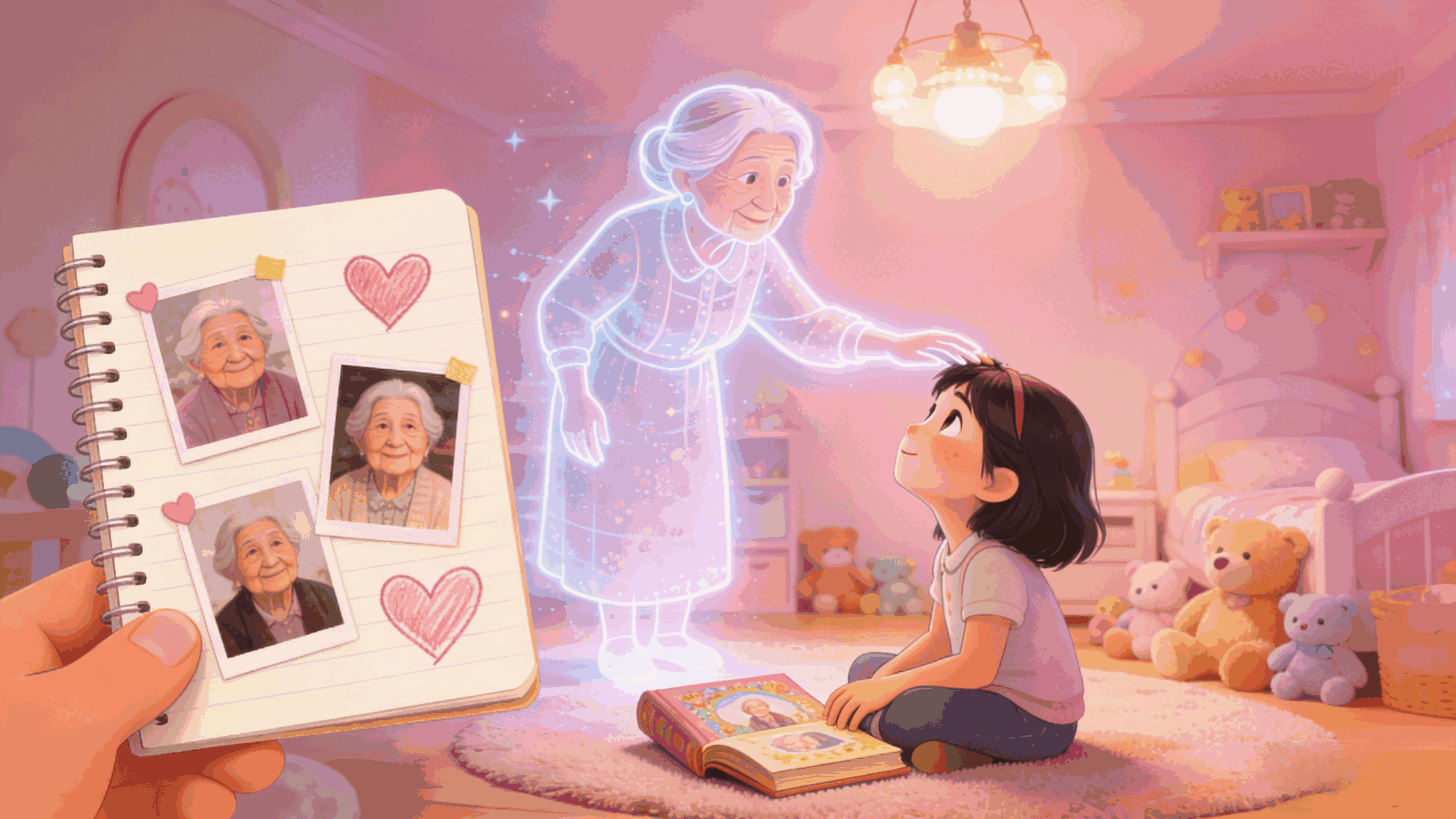
I. What is a "Memorial Digital Human"? What Can It Offer?
A memorial digital human is an interactive virtual avatar created through AI technology that replicates the portrait, voice, tone, and even thought patterns of deceased loved ones. It does not "resurrect" loved ones, but uses technology as a vehicle to continue memories and emotional connections. The core value is reflected in two aspects:
- Emotional outlet: Psychological research indicates that digital humans can create a "sense of connection" between the living and the deceased, helping to release suppressed longing and alleviate loneliness after loss. Like young Lucy, who created a virtual cemetery for her mother in a game and, through interaction with the digital avatar, let her grief flow freely.
- Memory reinforcement carrier: Over time, the voice and expression of loved ones will gradually fade, while digital humans can freeze precious moments through replication materials. Young Alex created an exclusive game for his grandmother, digitizing daily companionship scenes and letting his grandmother's character and time become his own support.
II. Practical Steps for Creating and Using Memorial Digital Humans
Creating a memorial digital human does not require complex technology. Following the three core principles of "material preparation - tool selection - ethical control", you can create a safe and compliant interactive experience:
1. Material Collection: The Foundation for Precise Replication
Material quality directly determines the realism level of the digital human. Prioritize collecting these contents and ensure the source is legal (only own materials from close relatives):
- Visual materials: 5-10 clear frontal photos (covering different expressions, angles), avoid blurry or overly filtered content.
- Audio materials: Original voice recordings of more than 15 seconds (prioritize daily conversations, admonitions), such as birthday blessings, daily chats, to better replicate tone and intonation.
- Character materials: Organize loved ones' catchphrases, thinking habits, and values (such as "yield in everything" "focus on health"), so that the digital human's responses better match the real personality.
2. Tool Selection: Choose the Appropriate Solution According to Needs
According to budget and interaction needs, you can choose different types of tools, considering both practicality and safety:
1. Entry level (free/low cost): Suitable for users who only need simple voice interaction, such as some AI letter apps, which can upload original voice materials to generate voice responses, simple operation, low threshold.
III. Psychological Adjustment When Using Digital Humans: Avoid Emotional Dependence
Digital humans are emotional tools, not a harbor to escape reality. Research by Spanish psychologist Belén Jiménez Alonso shows that excessive dependence on digital humans may strengthen the "denial" psychology after loss and hinder the normal mourning process. Follow these 3 principles:
- Set interaction boundaries: Control interaction frequency to 1-2 times per week, no more than 30 minutes each time, avoid occupying normal life and social time.
- Accept "imperfection": Digital humans cannot fully replicate the thinking of loved ones. When response deviations occur, calmly accept that "this is a technical simulation", do not pursue ultimate reality.
- Combine with real mourning: Combine writing letters, organizing belongings, participating in memorial activities, etc., so that digital humans become a memory supplement, not the only solace, and gradually complete psychological reconstruction.
IV. Frequently Asked Questions (FAQ)
1. Will creating a memorial digital human violate the rights of the deceased?
As long as it is led by close relatives, uses own materials, and is not used for commercial purposes or to violate privacy, it complies with relevant personal information protection laws and public order. If deceased materials are used without authorization or for traffic monetization, it is a possible rights violation.
2. Will long-term dialogue with digital humans affect mental health?
Reasonable use will not have negative effects, but can ease longing; however, excessive dependence, confusing virtual and reality, may prolong the mourning cycle. The key is to set boundaries, let digital humans serve psychological rehabilitation, not replace real life.
3. Can digital humans accurately replicate the thought patterns of loved ones?
Current technology cannot fully replicate consciousness and thinking. Digital humans are essentially a "creative stitching of algorithms on materials", responses are based on uploaded character materials and big data training. It can simulate tone and common expressions, but cannot generate the autonomous consciousness of loved ones.
4. Is there a risk of leakage after uploading materials?
Choose platforms with compliant qualifications, first check privacy policies, confirm "materials are only for personal use, not shared, not commercial", and at the same time avoid uploading overly sensitive content (such as medical records, financial information) to reduce leakage risk.
V. Summary and Call to Action
The core value of memorial digital humans is never to "resurrect" loved ones, but to use technology to find a corner where longing can be placed, so that precious memories are not faded by time. It is a companion on the path of loss, not the final destination—we will eventually, in the gentle connection with digital humans, gradually accept the loss and continue forward with the expectations of loved ones.